Impressionism
Capturing light and fleeting moments.
IMPRESSIONISM
Impressionism was an art movement that began in France during the late nineteenth century. Artists focused on capturing the effects of light, colour, and movement rather than creating highly detailed and realistic paintings. The movement marked the beginning of modern art and encouraged artists to paint scenes from everyday life.
Historical and
Social Context
Impressionism emerged during the 1870s in Paris. France was experiencing rapid industrialisation and urban growth. The invention of photography challenged traditional painting, causing artists to explore new ways of representing reality. Many Impressionist artists painted outdoors to capture changing light and atmosphere.
The movement was initially criticised because its paintings appeared unfinished compared to traditional academic art. However, it eventually became one of the most influential art movements in history.
• Visible brushstrokes
• Bright and vibrant colours
• Outdoor painting (en plein air)
• Focus on natural light
• Everyday subjects
• Capturing movement and fleeting moments
• Less emphasis on detail
Main
Characteristics
Major Artists
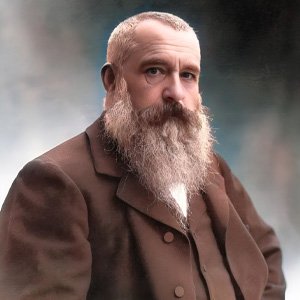
Claude Monet
(1840–1926)
Claude Monet is considered the founder of Impressionism. He focused on light and atmosphere, often painting the same subject at different times of day.
Famous Artworks
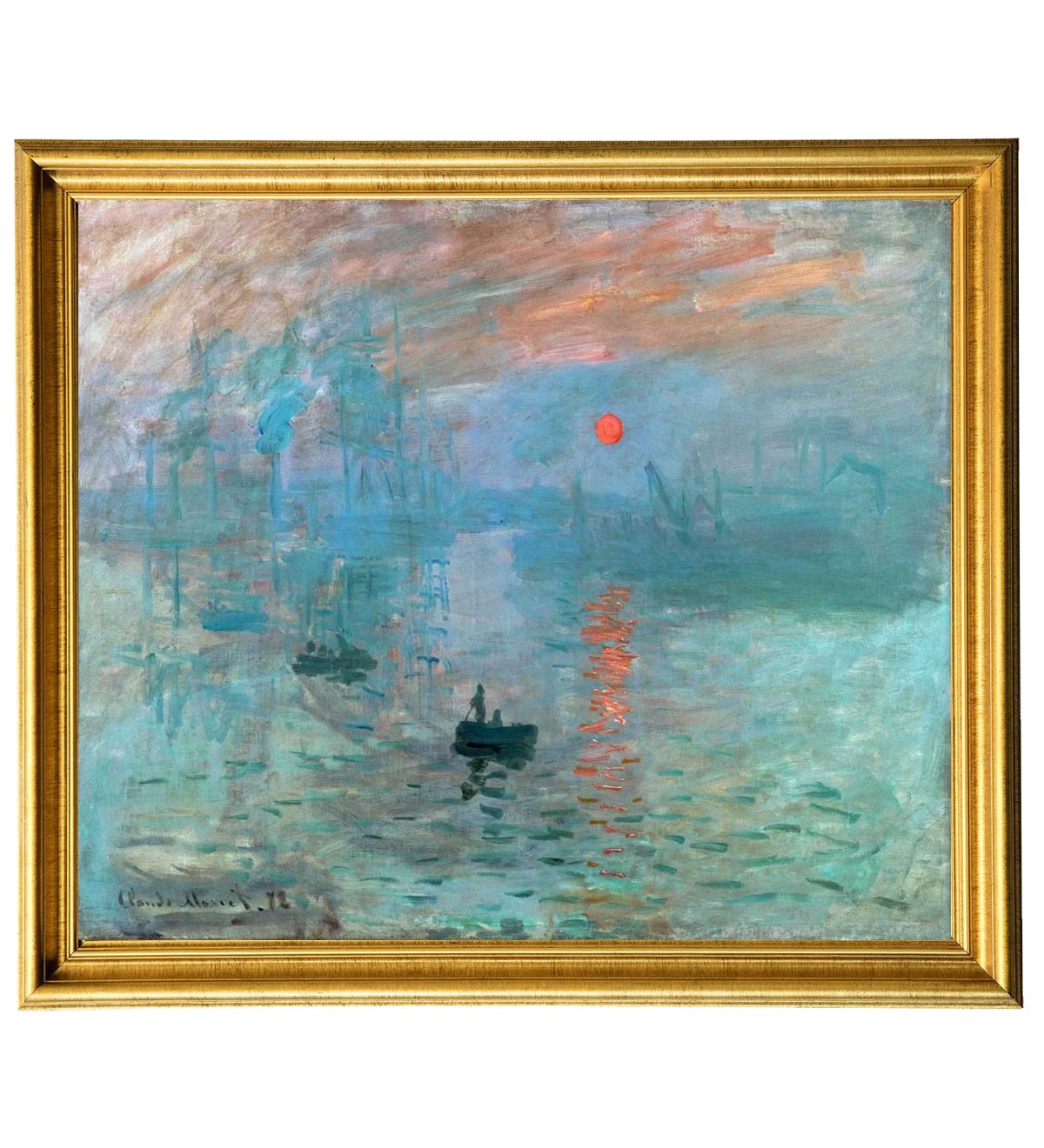
1. Impression, Sunrise (1872)
Caption: “Impression, Sunrise”
Claude Monet’s iconic painting that gave the Impressionist movement its name, capturing the misty atmosphere of sunrise over the port of Le Havre.
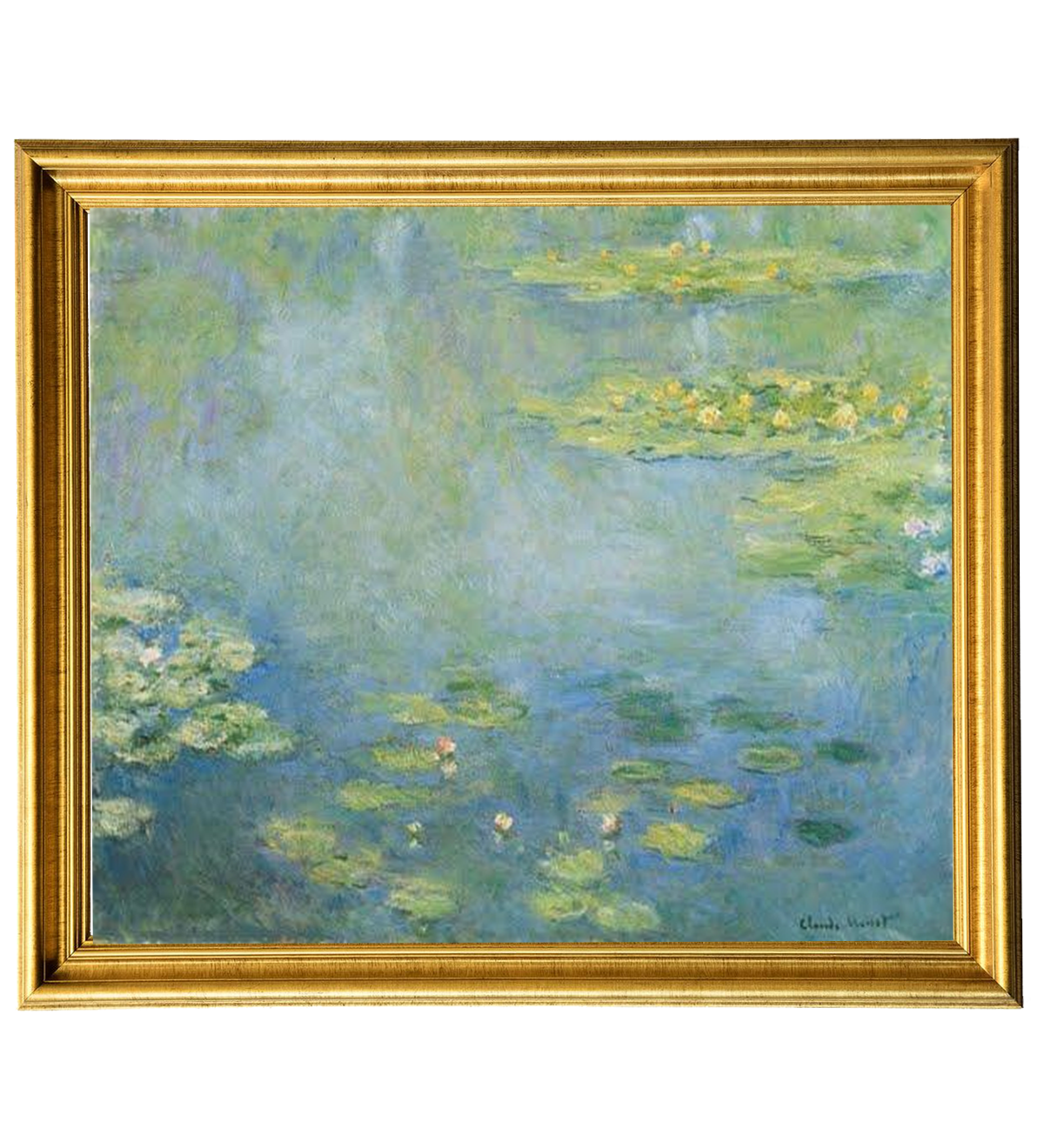
2. Water Lilies (1899)
Caption: “Water Lilies”
A peaceful study of light, reflections, and nature, inspired by the water garden at Monet’s home in Giverny.
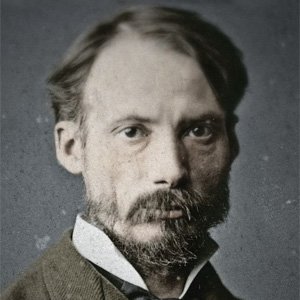
Pierre-Auguste Renoir
(1841–1919)
Renoir celebrated social gatherings and human interaction through colourful and lively paintings.
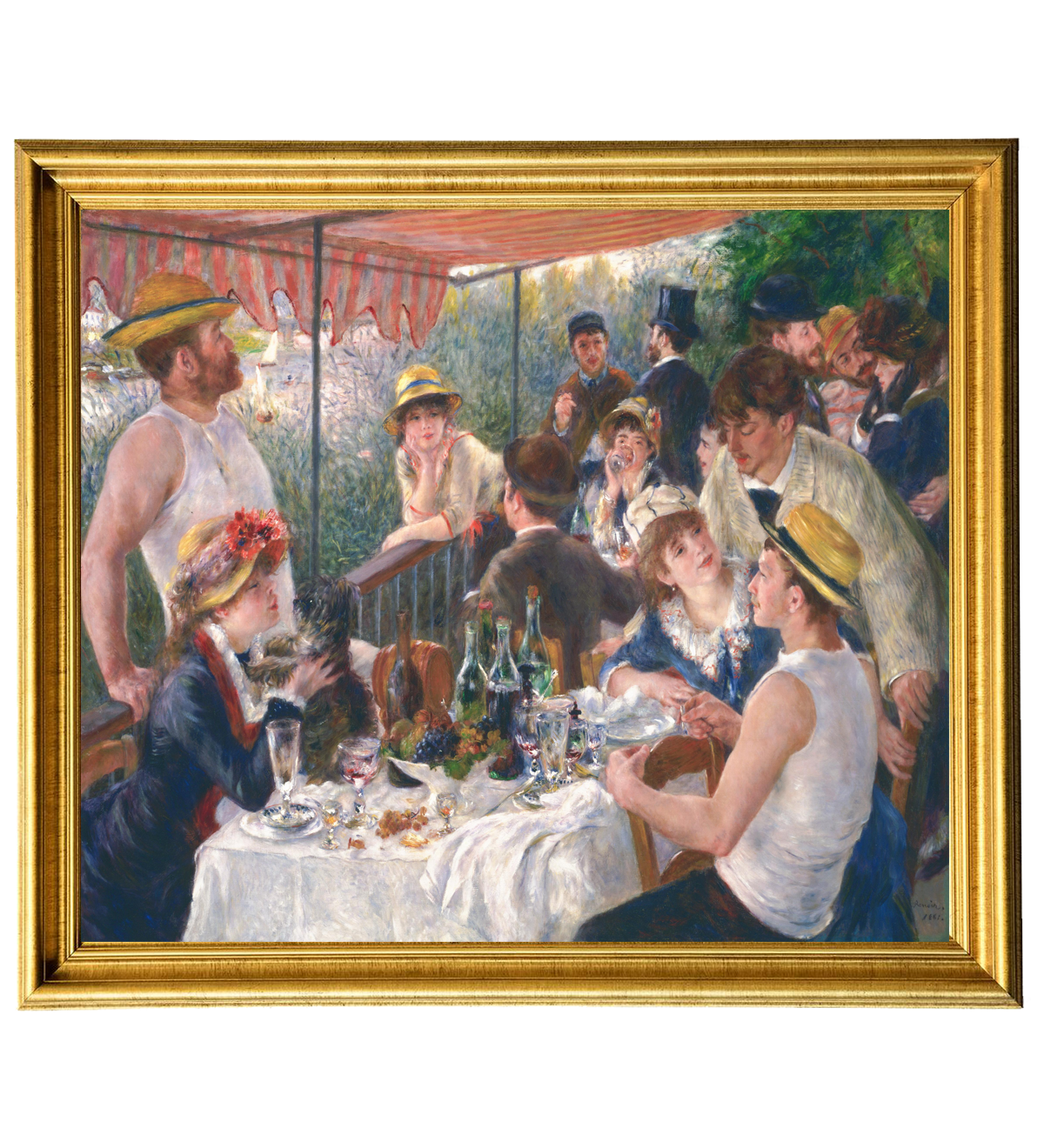
1. Luncheon of the Boating Party (1881)
Caption: “Luncheon of the Boating Party”
Renoir captures a lively afternoon of friends enjoying food, conversation, and sunlight along the Seine.
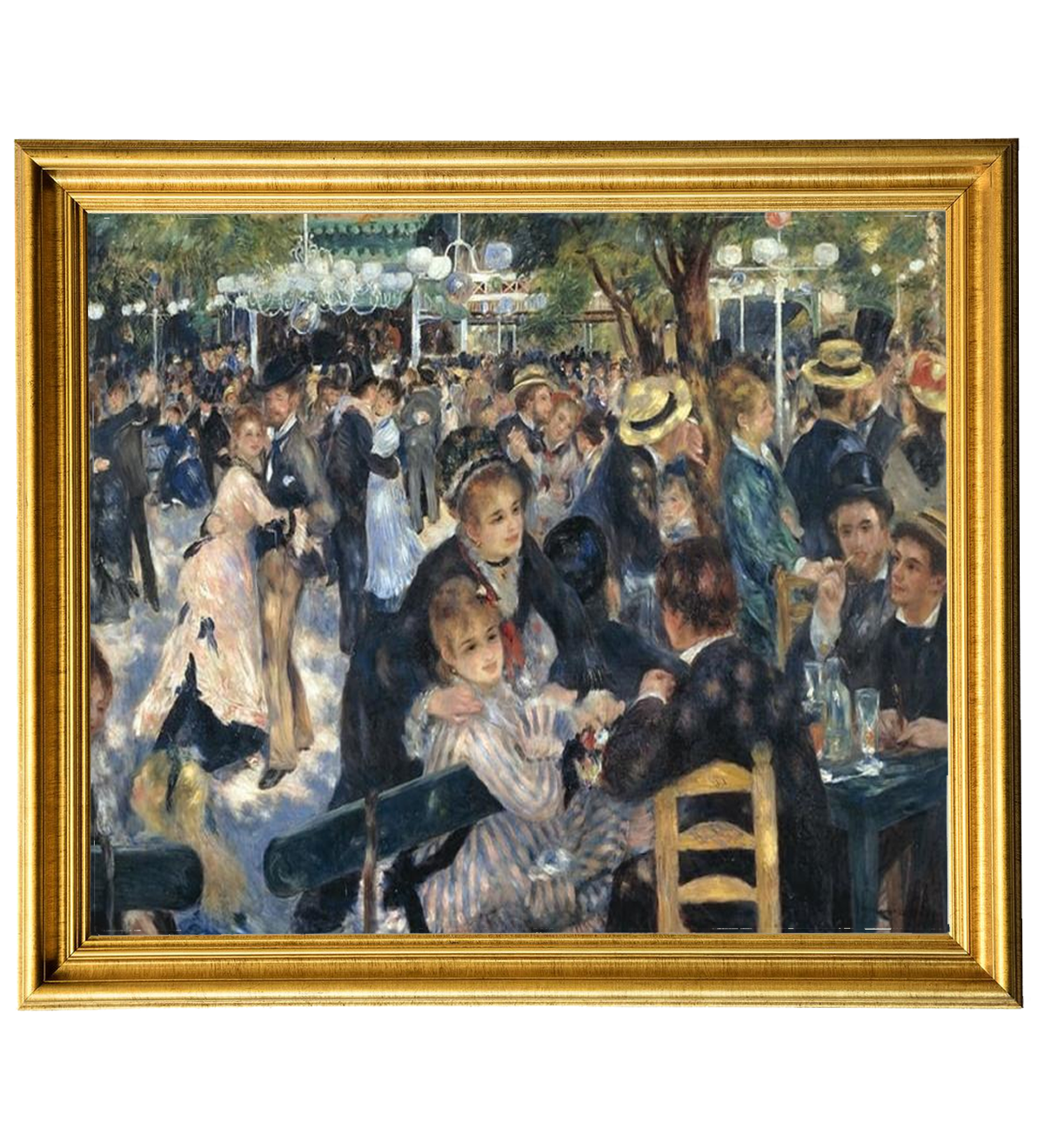
2.Dance at Le Moulin de la Galette (1876)
Caption: “Dance at Le Moulin de la Galette”
A vibrant scene of Parisian life, showing people dancing and socialising on a sunny afternoon.
Influences
-Historical Influence
The Industrial Revolution transformed cities and everyday life.
-Social Influence
The growing middle class created new leisure activities that artists enjoyed painting.
-Technological Influence
Photography encouraged artists to move away from realistic representation.
-Geographical Influence
The French countryside and urban Paris provided inspiration.
-Philosophical Influence
Artists wanted to capture personal impressions rather than objective reality.
Insight
and conclution.
I find Impressionism important because it changed the way artists viewed painting. Instead of creating perfect copies of reality, artists focused on expressing the feeling of a moment. This movement laid the foundation for many modern art styles that followed.Through artists such as Claude Monet and Pierre-Auguste Renoir, the movement challenged traditional artistic standards and influenced the development of modern art.Impressionism revolutionised art by emphasising colour, light, and personal perception.
Post-Impressionism
Post-Impressionism
Impressionism was an art movement that began in France during the late nineteenth century. Artists focused on capturing the effects of light, colour, and movement rather than creating highly detailed and realistic paintings. The movement marked the beginning of modern art and encouraged artists to paint scenes from everyday life.
Historical and
Social Context
Post-Impressionism emerged during the late nineteenth century when Europe was experiencing rapid industrialisation, scientific discoveries, and cultural change. While Impressionists focused on recording the visual effects of light and colour, many artists wanted their work to communicate deeper meaning and stronger emotions.Artists such as Vincent van Gogh used bold colours and expressive brushstrokes to show feelings, while Paul Cézanne explored structure and form, influencing Cubism. Others, like Paul Gauguin, searched for spiritual meaning through symbolic imagery.
Although these artists worked independently, they shared a desire to move beyond the limitations of Impressionism.
• Bold, expressive colours
• Visible brushstrokes
• Emotional expression
• Symbolism and personal meaning
• Simplified forms
• Strong outlines
• Greater focus on structure and composition
• Individual artistic styles
• Less concern for realistic colour
• Experimentation with technique
Main
Characteristics
Major Artists
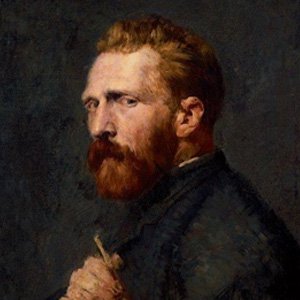
Vincent van Gogh
(1853–1890)
Van Gogh is one of the world’s most famous artists. His energetic brushstrokes, vibrant colours, and emotional paintings expressed his inner feelings rather than simply depicting reality. His work had a major influence on Expressionism.
Famous Artworks
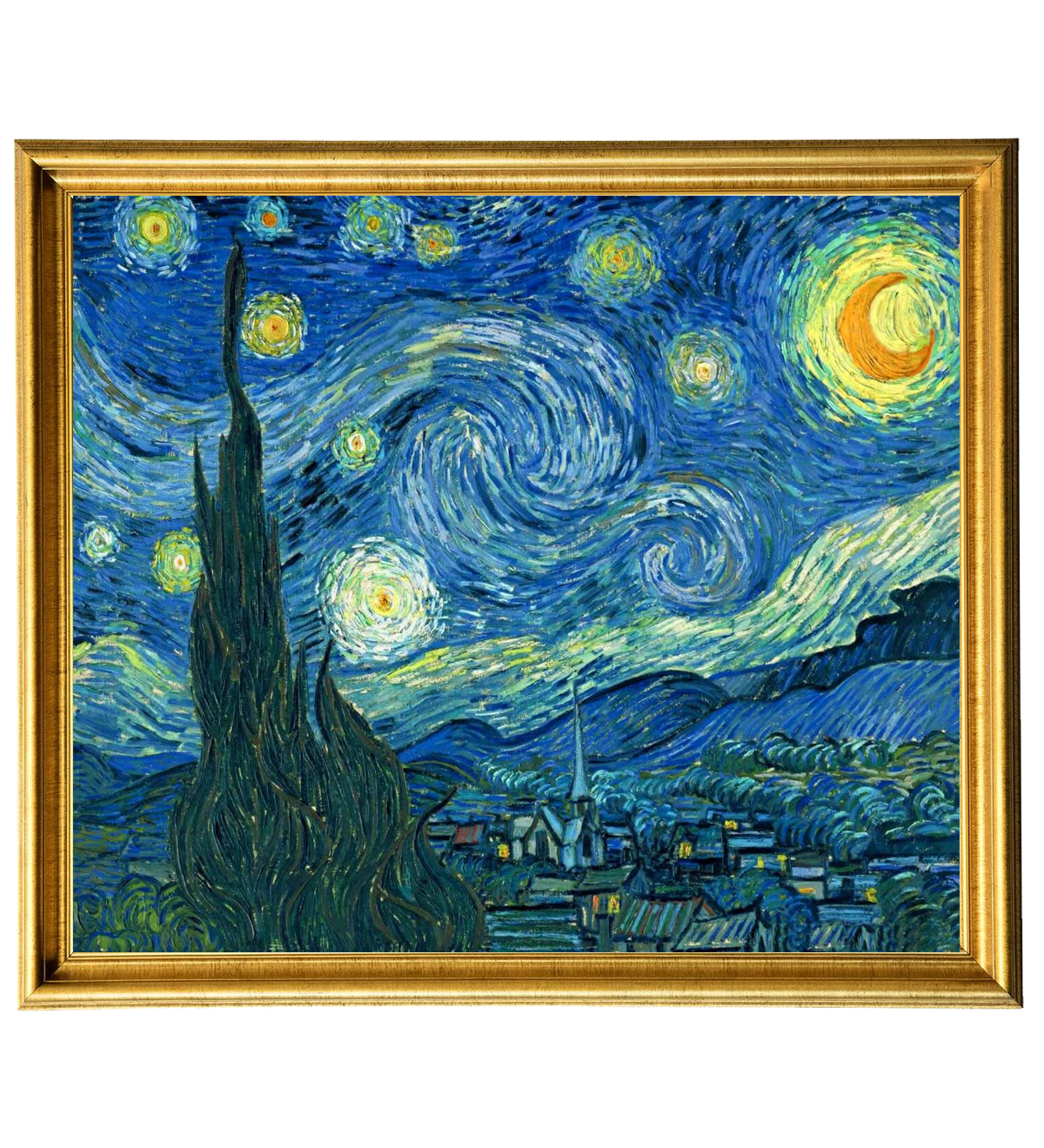
1. The Starry Night (1889)
Caption: “The Starry Night”
Van Gogh’s expressive night sky transforms a quiet village into a swirling world of colour, movement, and emotion.
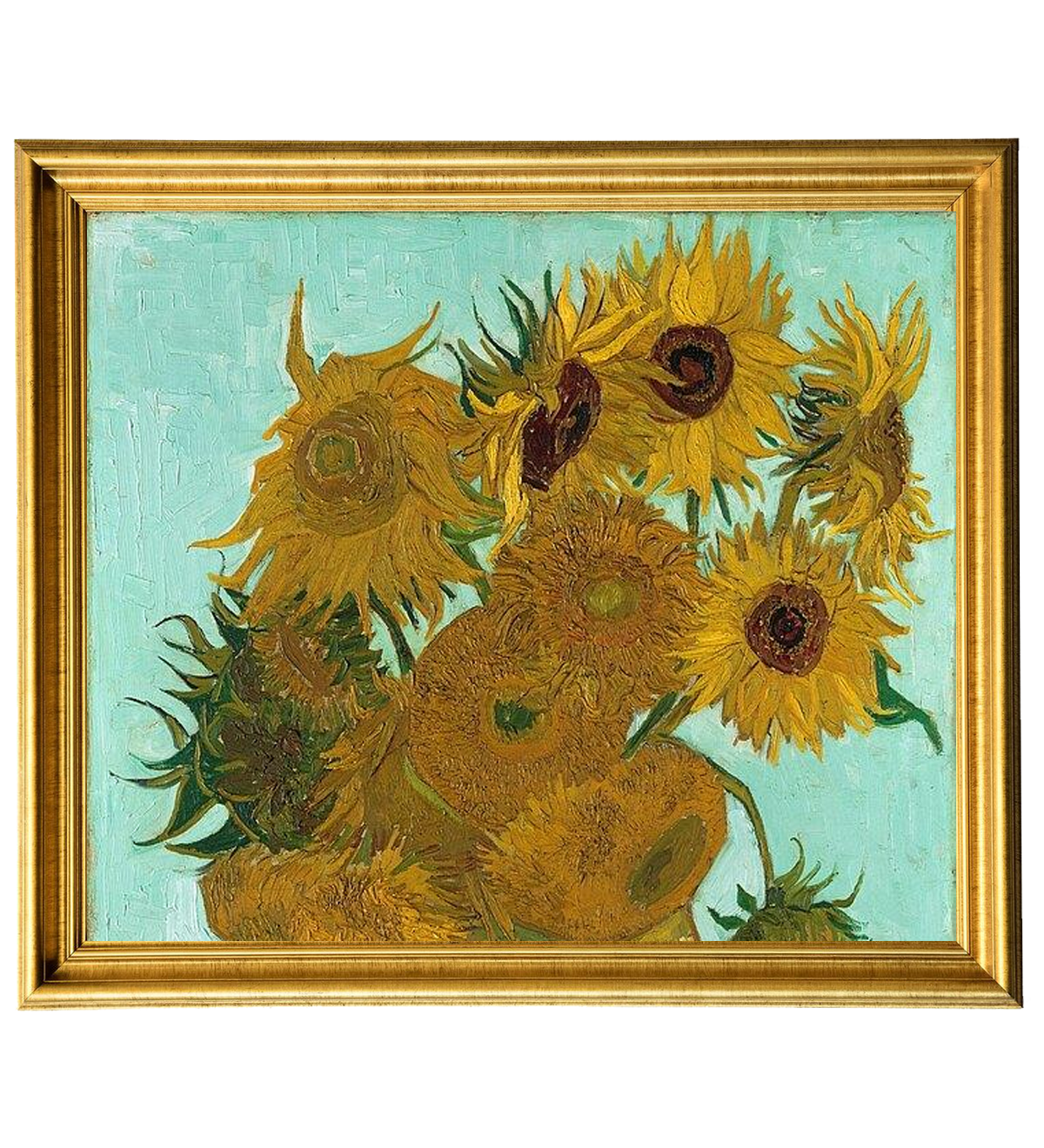
2. Sunflowers (1888)
Caption: “Sunflowers”
A vibrant still life celebrating the beauty of nature through bold yellow tones and energetic brushstrokes.
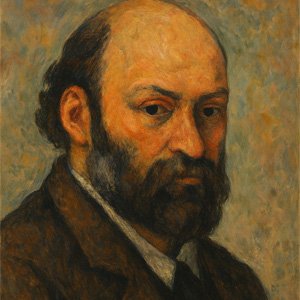
Paul Cézanne
(1839–1906)
Cézanne believed nature could be reduced to simple geometric shapes. His exploration of form and perspective became the foundation for Cubism and greatly influenced artists such as Pablo Picasso.
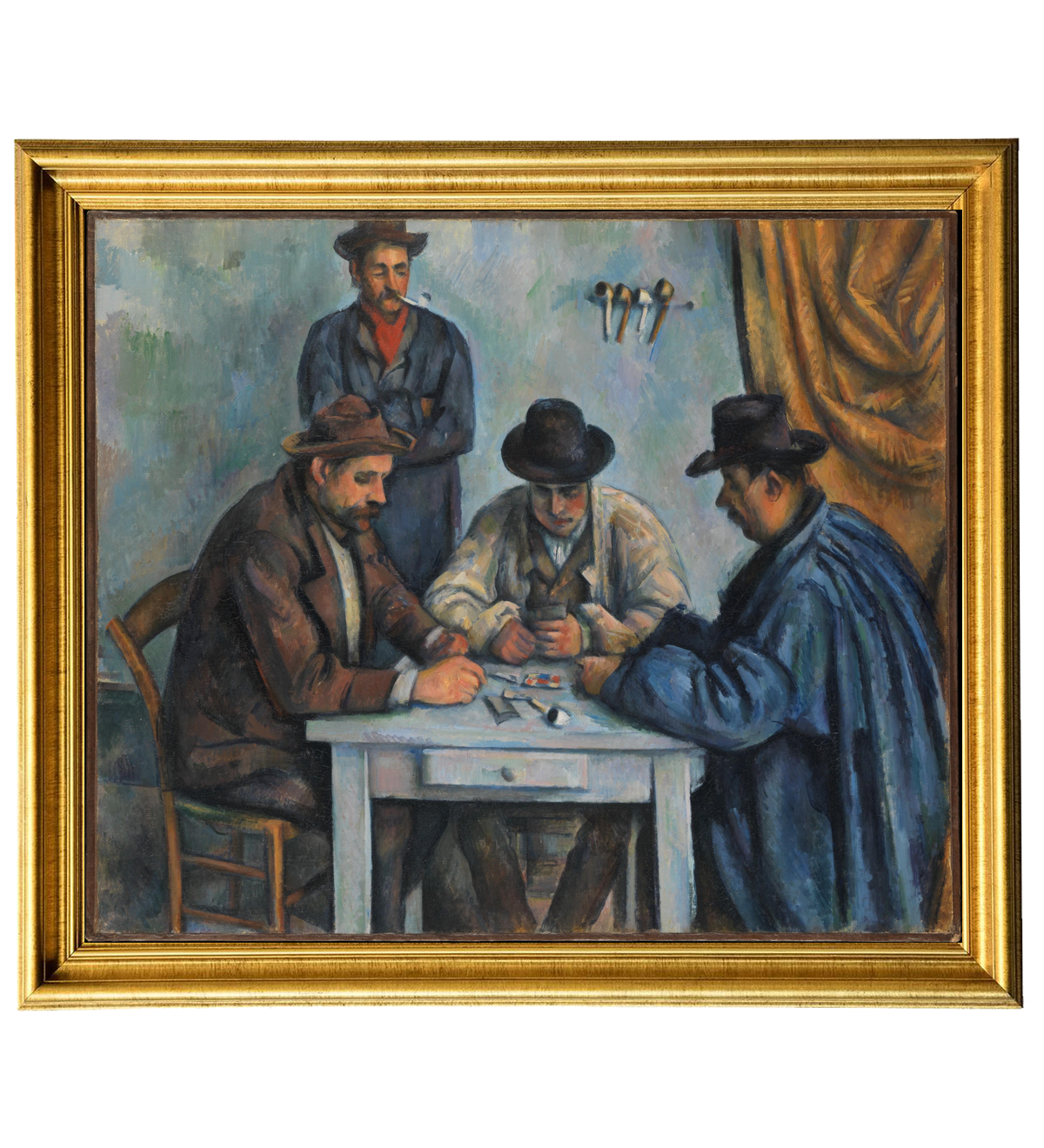
1. The Card Players (1890–18
95)
Caption: “The Card Players” Cézanne portrays ordinary people in a quiet moment, using strong shapes, colour, and structure to create a balanced composition.
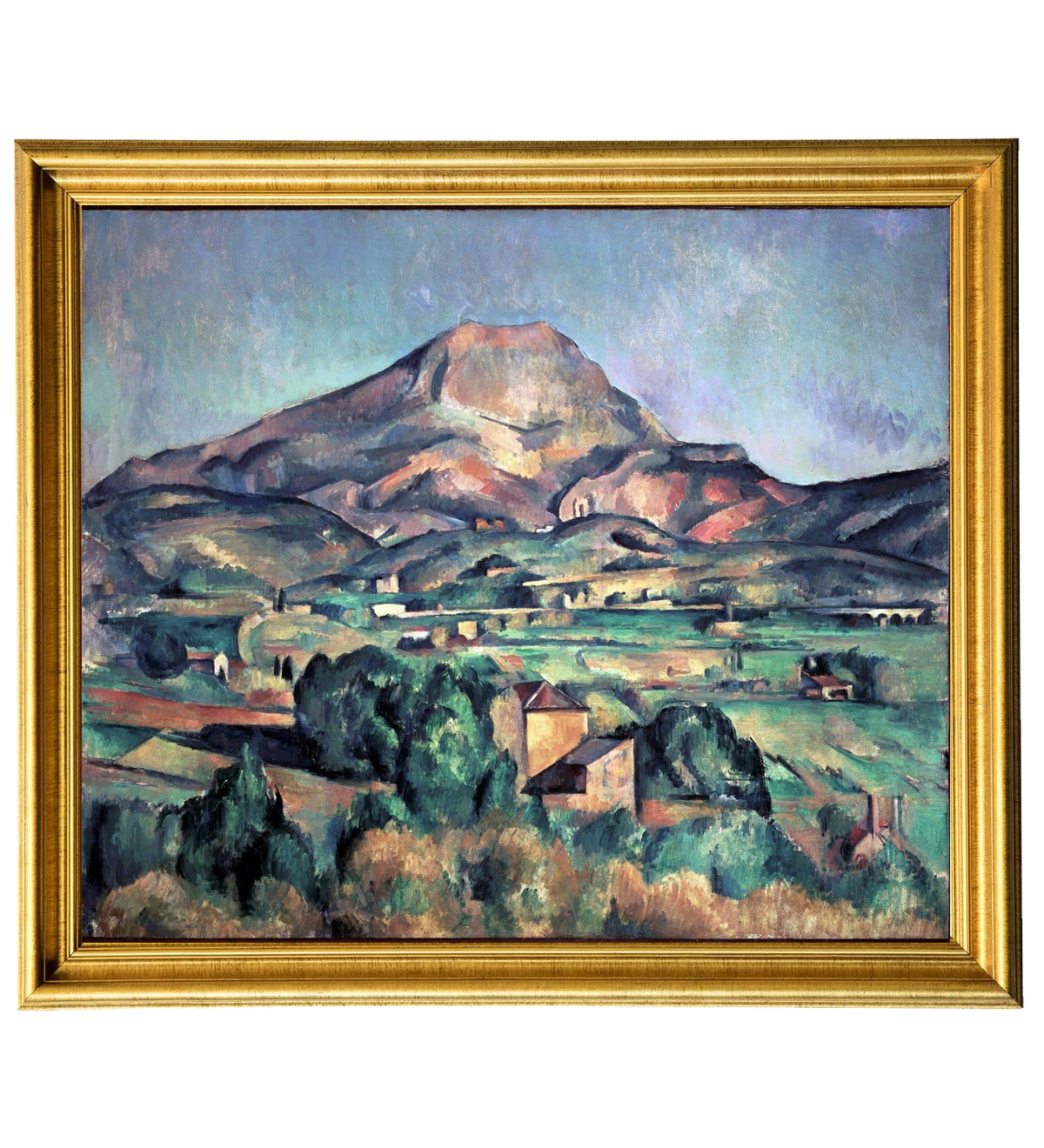
2. Mont Sainte-Victoire (c. 1887)
Caption: “Mont Sainte-Victoire”
Cézanne repeatedly painted this landscape, exploring nature through geometric forms, colour, and simplified shapes.
Influences
-Historical Influence
Industrialisation and modern city life encouraged artists to search for new ways of expressing themselves.
-Social Influence
Artists began rejecting strict academic traditions and wanted greater artistic freedom.
-Geographical Influence
Most Post-Impressionists worked in France, but many travelled throughout Europe and beyond, finding inspiration in different cultures and landscapes.
Philosophical Influence
The movement reflected ideas about emotion, individuality, imagination, and spirituality. Artists believed paintings should communicate feelings and personal experiences rather than simply copy nature.
-Artistic Influence
Japanese woodblock prints inspired many artists through their bold outlines, flat colours, and unusual compositions.
Insight
and conclution.
I think Post-Impressionism is important because it gave artists the freedom to develop their own personal styles instead of following one set of rules. It showed that art could communicate emotions, ideas, and imagination, making it one of the most influential movements in the history of modern art.Post-Impressionism expanded the ideas of Impressionism by focusing on emotion, symbolism, and structure. Artists such as Vincent van Gogh and Paul Cézanne transformed painting into a powerful form of personal expression. Their innovations inspired many later movements, including Fauvism, Expressionism, and Cubism.
Fauvism
Fauvism
Fauvism was a modern art movement that emerged in France between 1905 and 1910. It was known for its bold, unrealistic colours and expressive style. Rather than painting the world exactly as it appeared, Fauvist artists used colour to communicate emotion and create visual impact. The name Fauvism comes from the French word “Les Fauves,” meaning “The Wild Beasts,” because critics thought the paintings looked wild and untamed.
Historical and
Social Context
Fauvism developed in the early twentieth century when artists were searching for new ways to express themselves. Inspired by Post-Impressionists such as Vincent van Gogh and Paul Gauguin, Fauvist artists rejected traditional rules of realistic colour and perspective.
The movement began in Paris and was first exhibited at the Salon d’Automne in 1905. Although Fauvism only lasted a few years, it became one of the first major avant-garde movements and influenced many later styles, including Expressionism.
• Bright, bold, and unrealistic colours
• Simplified forms and shapes
• Thick, visible brushstrokes
• Strong outlines
• Minimal shading
• Emotional rather than realistic colour
• Flat areas of colour
• Decorative compositions
• Expressive and energetic style
• Less focus on accurate perspective
Main
Characteristics
Major Artists
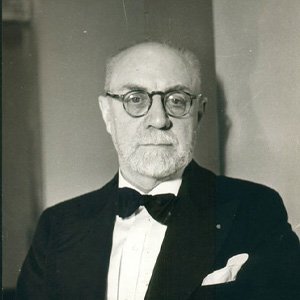
Henri Matisse
(1869–1954)
Henri Matisse was the leading artist of Fauvism. He believed colour could express emotion more powerfully than realistic detail. His paintings are known for their vibrant colours, flowing lines, and decorative compositions.
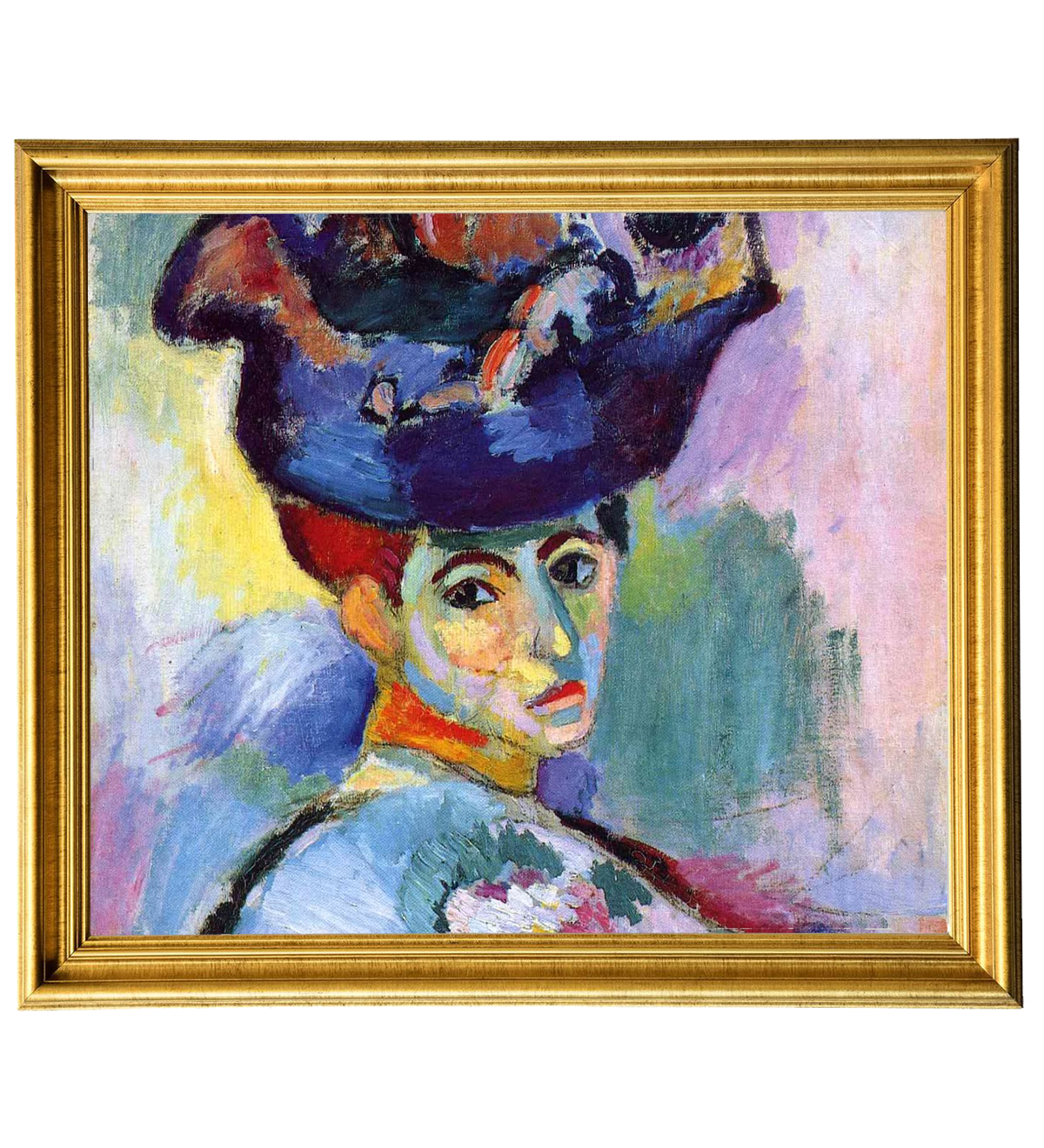
1. Woman with a Hat (1905)
Caption: “Woman with a Hat” — Matisse uses bold, unnatural colours and loose brushstrokes to create a striking portrait, helping define the Fauvist style.
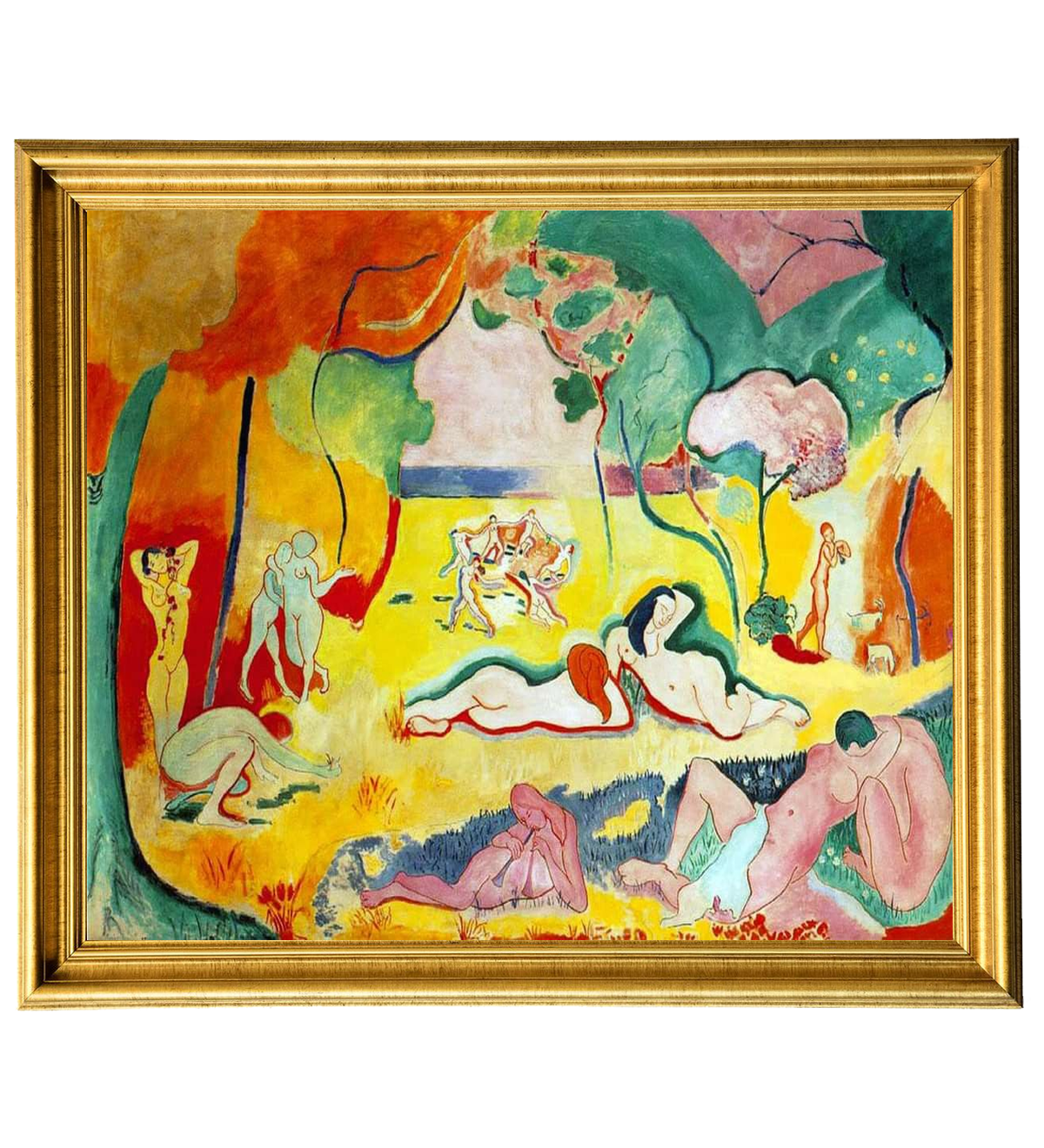
2. The Joy of Life (1905–1906)
Caption: “The Joy of Life” — A colourful and dreamlike scene celebrating nature, freedom, and happiness through simplified forms and vivid colours.
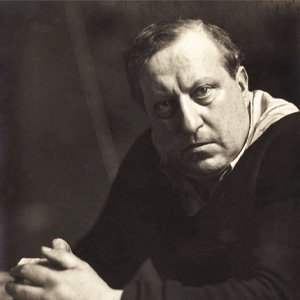
Henri Matisse
(1880–1954)
André Derain helped establish Fauvism alongside Matisse. His landscapes and city scenes used bold colours to create atmosphere rather than realism.
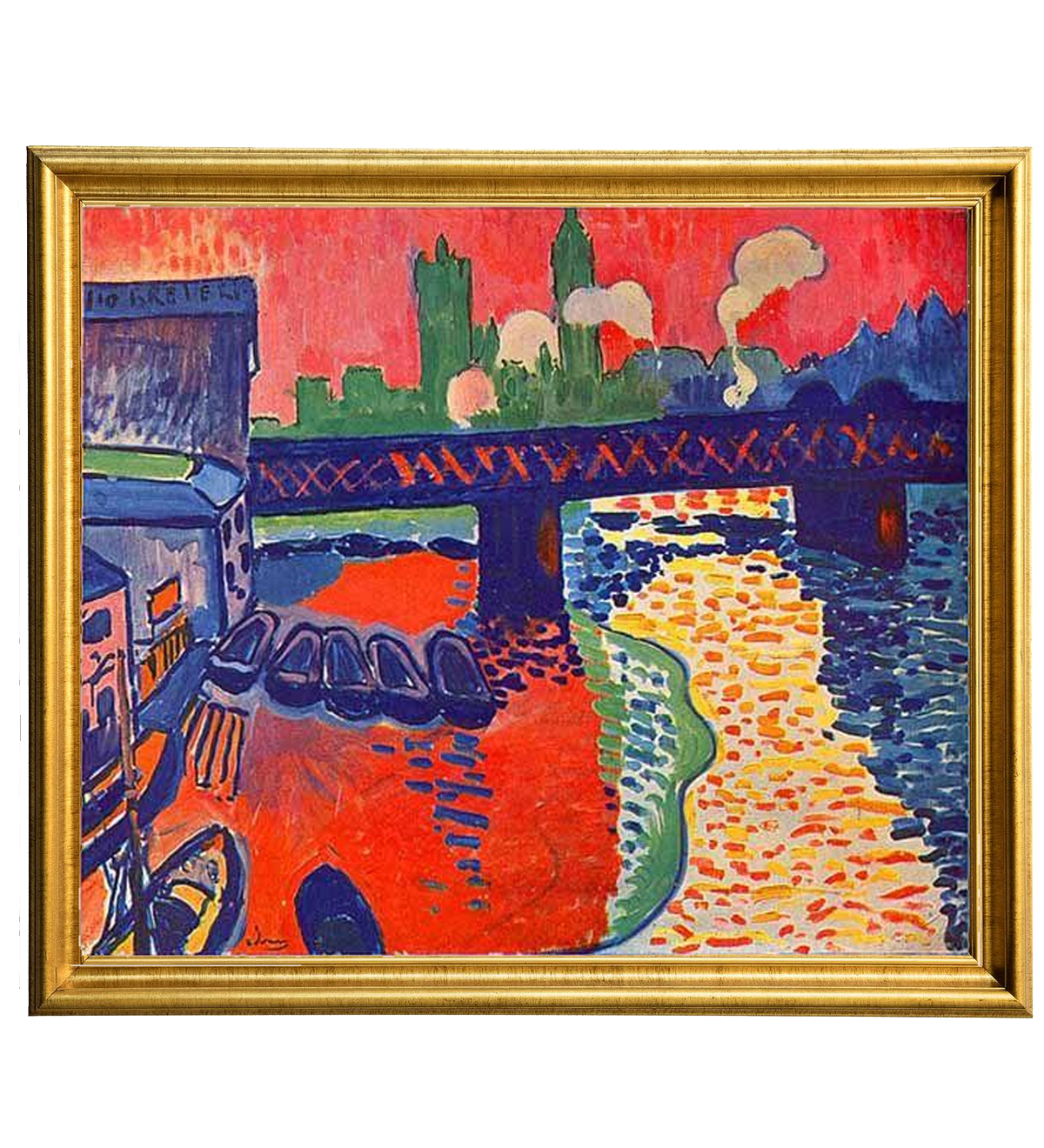
1. Charing Cross Bridge (1906)
Caption: “Charing Cross Bridge” — Derain transforms a London cityscape with bright, expressive colours and bold brushstrokes, showing the influence of Fauvism.
2. The Turning Road, L’Estaque (1906)
Caption: “The Turning Road, L’Estaque” — A vibrant landscape using intense colours and simplified shapes to create a powerful and energetic view of nature.
Influences
-Historical Influence
The movement developed during a period of rapid artistic experimentation, when artists wanted to break away from traditional academic painting.
-Social Influence
Artists wanted greater creative freedom and believed art should express emotion instead of simply copying nature.
-Geographical Influence
Fauvism began in Paris, France, where artists gathered to experiment with new artistic ideas.
-Philosophical Influence
Fauvist artists believed colour had the power to communicate feelings without needing to represent reality accurately.
-Artistic Influence
Fauvism was influenced by:
• Post-Impressionism
• Vincent van Gogh’s expressive brushwork
• Paul Gauguin’s bold colours
• Japanese woodblock prints
Insight
and conclution.
Student Insight
I think Fauvism is important because it proved that colours do not have to look realistic to create meaningful art. The movement encouraged artists to experiment and express emotions freely, making it one of the foundations of modern art.Artists such as Henri Matisse and André Derain transformed painting by using bold colours and expressive techniques. Their willingness to challenge artistic traditions inspired future movements such as Expressionism and Abstract Art.
Expressionism
expressionism
Expressionism was a modern art movement that developed in Germany during the early 20th century (around 1905–1920). Instead of portraying reality accurately, Expressionist artists focused on expressing intense emotions and personal experiences. They used exaggerated colours, distorted forms, and energetic brushstrokes to communicate feelings such as fear, loneliness, joy, and anxiety.
Historical and
Social Context
Expressionism emerged during a period of rapid industrialisation, political tension, and social change in Europe. Many artists felt that modern society had become stressful and emotionally disconnected. Rather than celebrating the outside world, they explored their inner emotions and psychological experiences.
The movement became especially significant before and after World War I, when many artists reflected the fear, uncertainty, and suffering caused by war and social unrest. Two important German Expressionist groups were Die Brücke (The Bridge) and Der Blaue Reiter (The Blue Rider).
• Bold and exaggerated colours
• Distorted shapes and figures
• Visible, energetic brushstrokes
• Emotional and psychological themes
• Simplified forms
• Dramatic contrasts
• Strong outlines
• Symbolic imagery
• Focus on personal expression rather than realism
• Dynamic compositions
Main
Characteristics
Major Artists
Edvard Munch
(1863–1944)
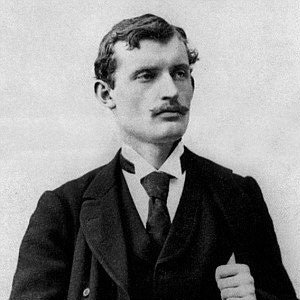
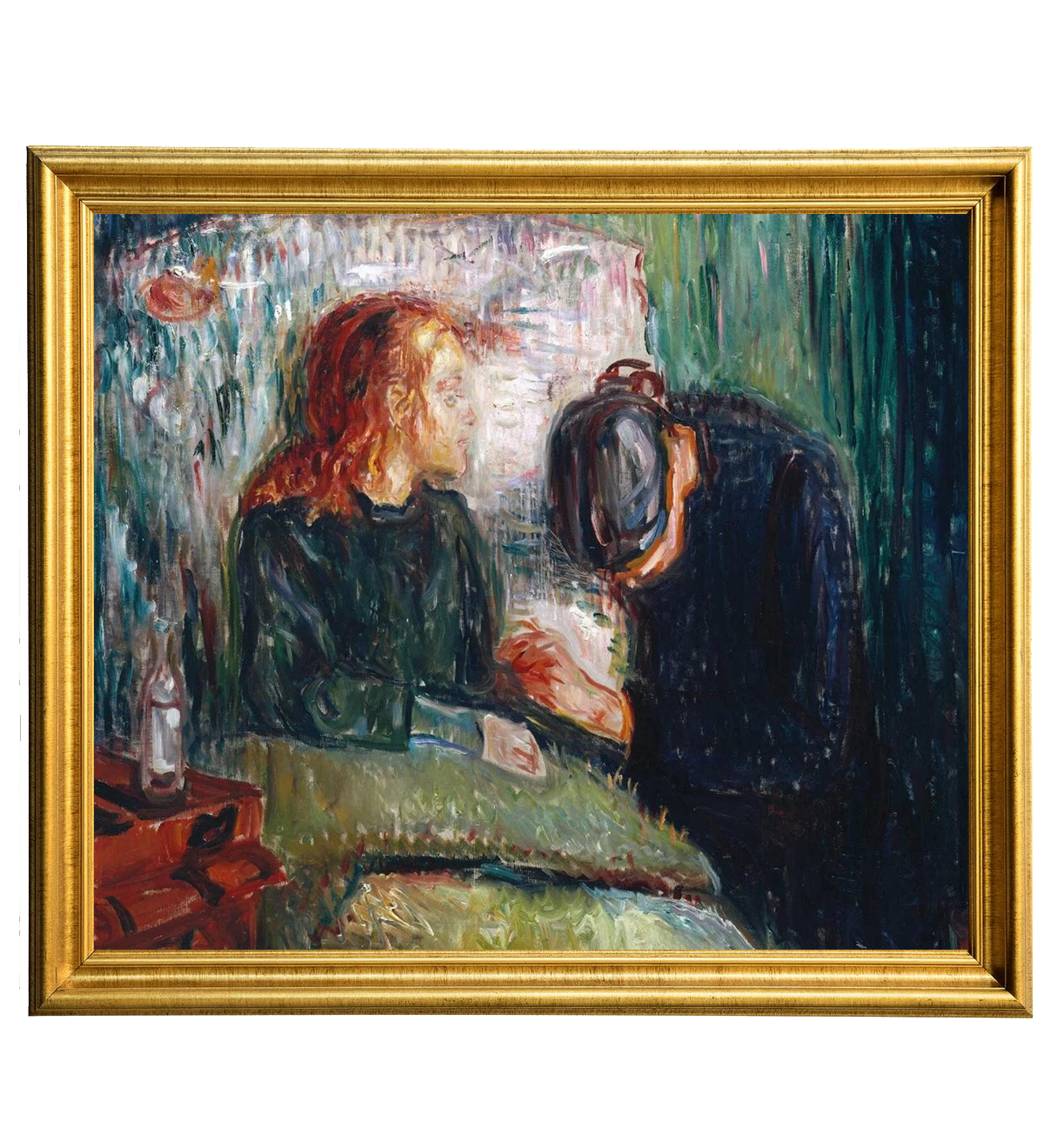
Although Norwegian, Edvard Munch greatly influenced Expressionism. His paintings explored themes of anxiety, loneliness, love, and death using dramatic colours and expressive forms.
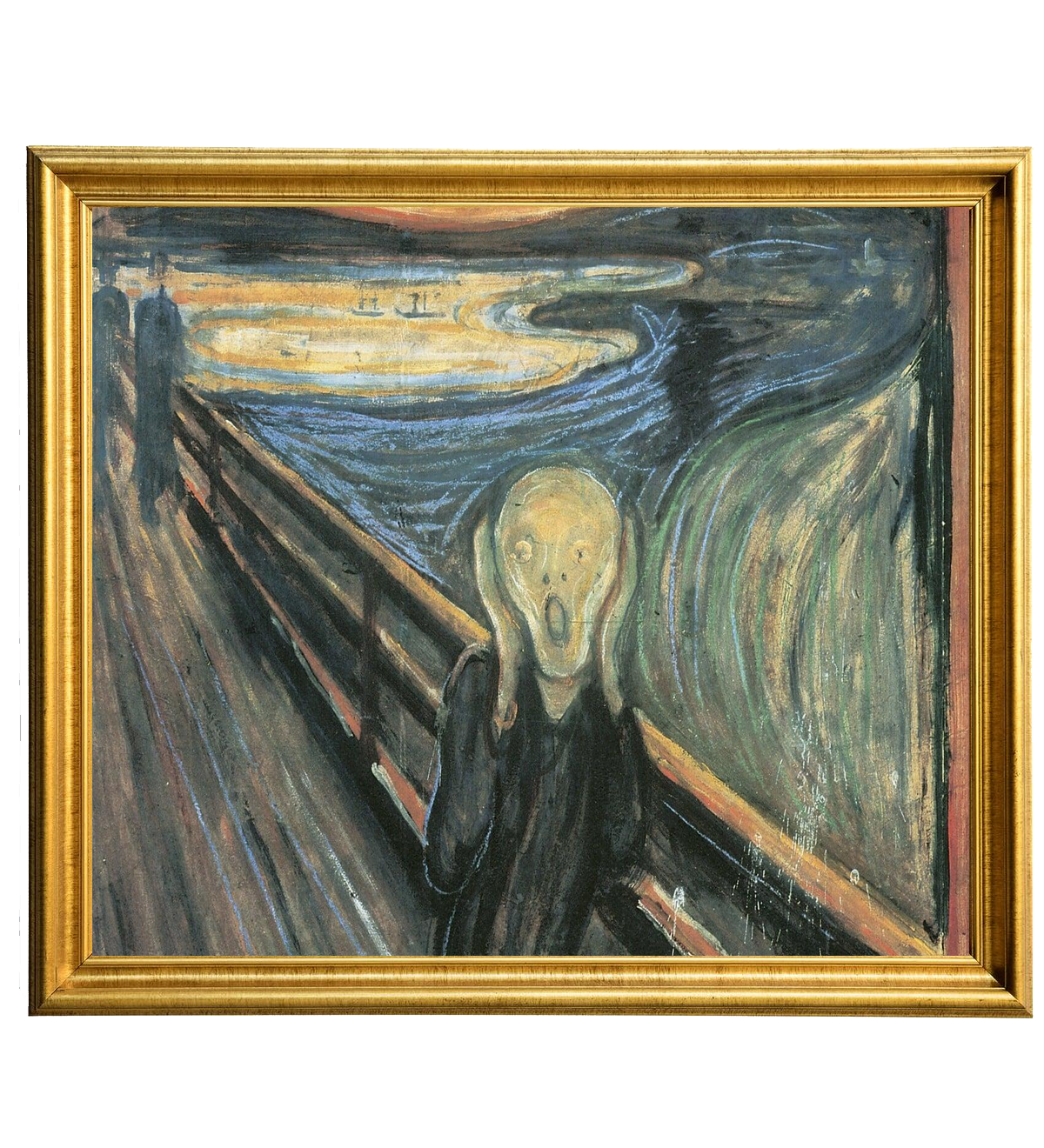
1. The Scream (1893)
Caption: “The Scream” — Munch captures intense feelings of anxiety and fear through distorted shapes, dramatic colours, and a haunting figure.
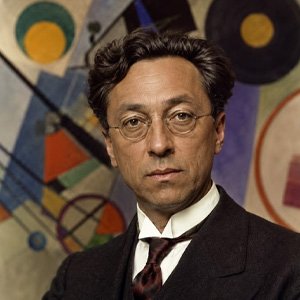
Wassily Kandinsky
(1866–1944)
Kandinsky believed colours and shapes could express emotions without representing real objects. He became one of the pioneers of abstract art.
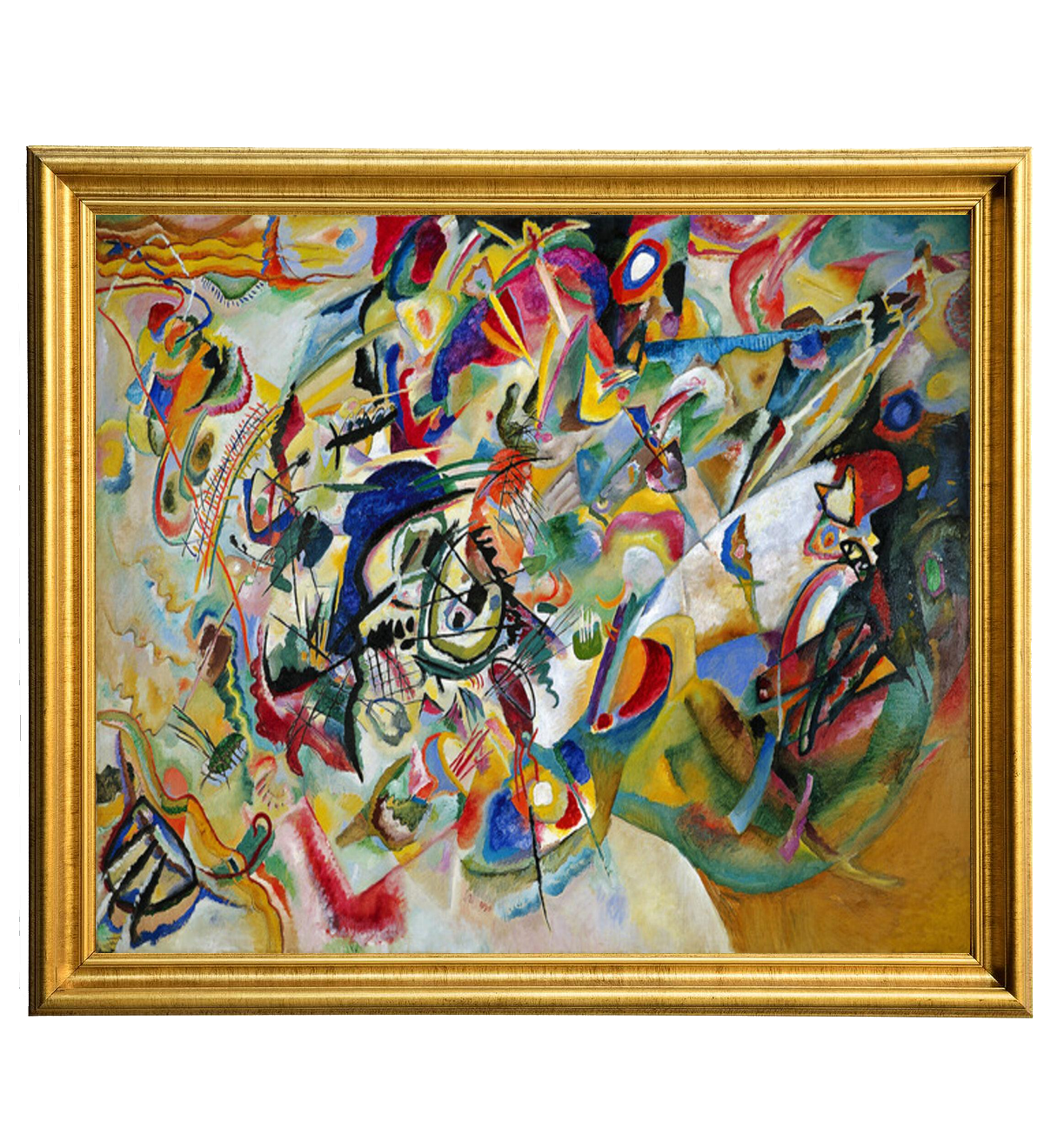
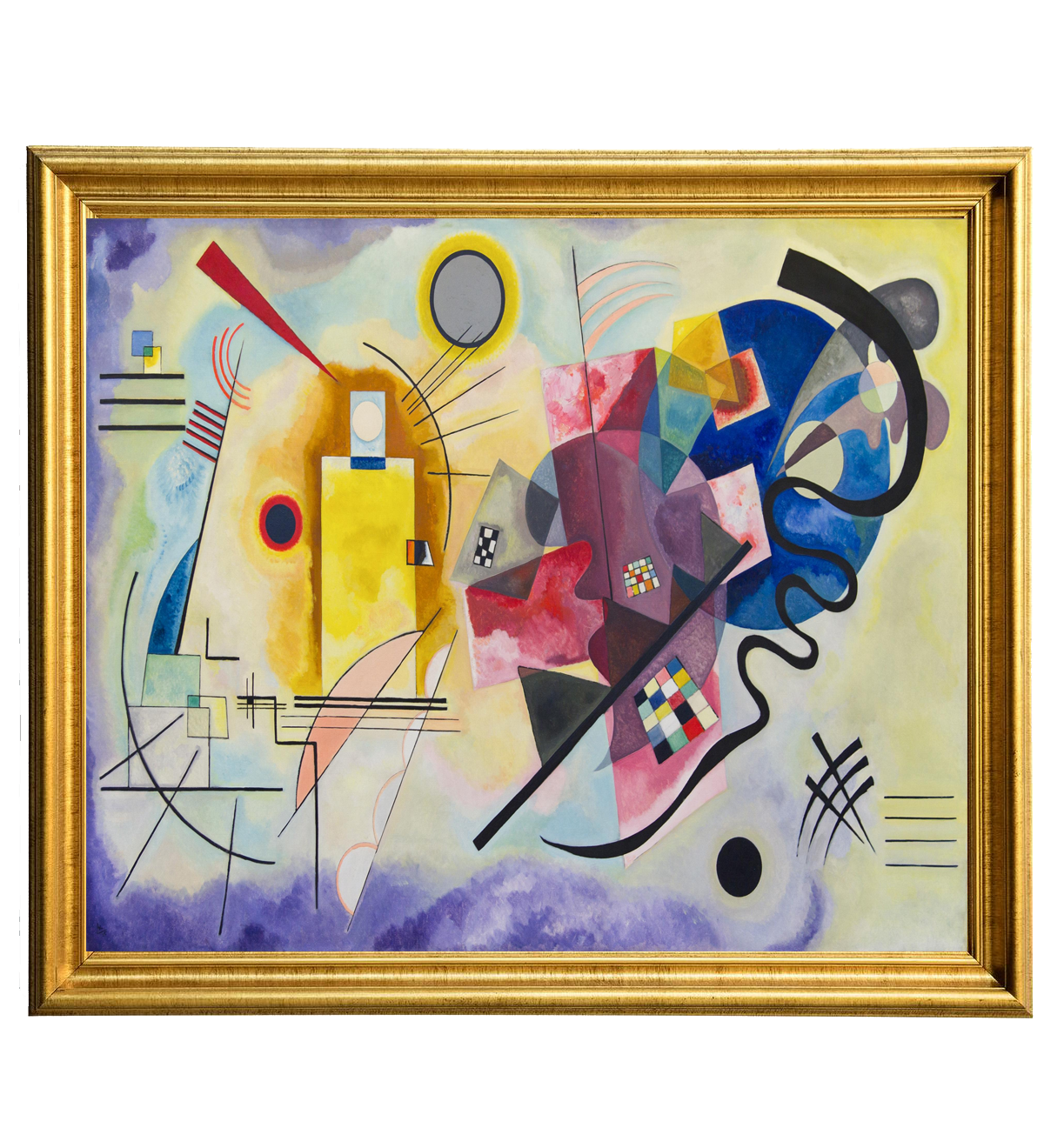
1. Composition VII (1913)
Caption: “Composition VII” — Kandinsky creates a powerful abstract world of swirling shapes and vibrant colours, expressing emotion through movement and form.
Influences
-Historical Influence
The uncertainty leading up to World War I and the devastation caused by the war deeply influenced Expressionist artists.
-Social Influence
Rapid industrialisation and urbanisation caused feelings of isolation and anxiety, which became common themes in Expressionist art.
-Geographical Influence
Expressionism began mainly in Germany but later spread throughout Europe.
-Philosophical Influence
Expressionist artists believed that emotions and personal experiences were more important than accurately representing reality
-Artistic Influence
Insight
and conclution.
Student Insight
I think Expressionism is important because it shows that art can communicate powerful emotions without needing to look realistic. The movement encourages artists to express their personal feelings and experiences, making art more meaningful and relatable.Expressionism transformed modern art by placing emotion above realism. Through bold colours, distorted forms, and expressive techniques, artists such as Edvard Munch and Wassily Kandinsky challenged traditional artistic conventions and inspired later movements, including Abstract Art and Abstract Expressionism.
Cubism
cubism
Cubism was a revolutionary art movement that began in France between 1907 and 1914. Instead of showing subjects from a single viewpoint, Cubist artists broke objects into geometric shapes and displayed multiple perspectives at the same time. This new approach challenged traditional ideas of perspective and became one of the most influential movements in modern art.
Historical and
Social Context
Cubism emerged during a time of rapid scientific and technological advancement in Europe. Artists wanted to move away from realistic representation and experiment with new ways of seeing the world. Influenced by Paul Cézanne’s geometric approach to nature and African tribal masks, Cubist artists simplified objects into basic forms.The movement developed mainly in Paris and became one of the foundations of modern art. It also influenced architecture, sculpture, literature, and graphic design.
• Geometric shapes
• Multiple viewpoints in one image
• Fragmented forms
• Flattened picture space
• Limited colour palette (especially in Analytical Cubism)
• Overlapping planes
• Abstract appearance
• Emphasis on structure rather than realism
• Collage techniques (especially in Synthetic Cubism)
• Simplified objects
Main
Characteristics
Major Artists
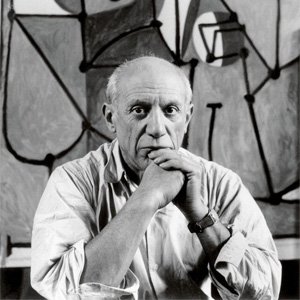
Pablo Picasso
(1881–1973)
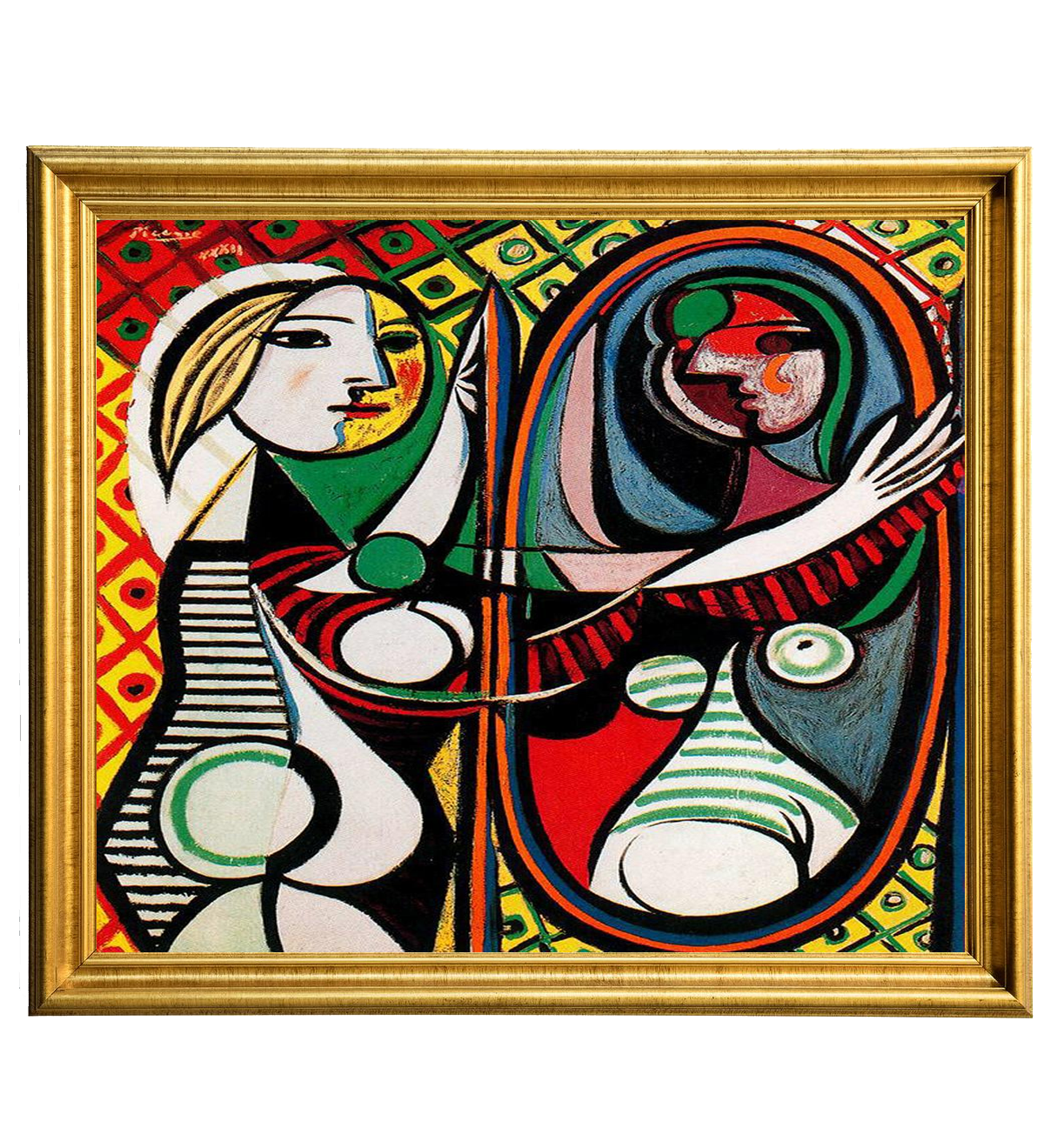
Pablo Picasso co-founded Cubism and is regarded as one of the greatest artists of the twentieth century. His work constantly evolved, and Cubism became one of his most important contributions to modern art.
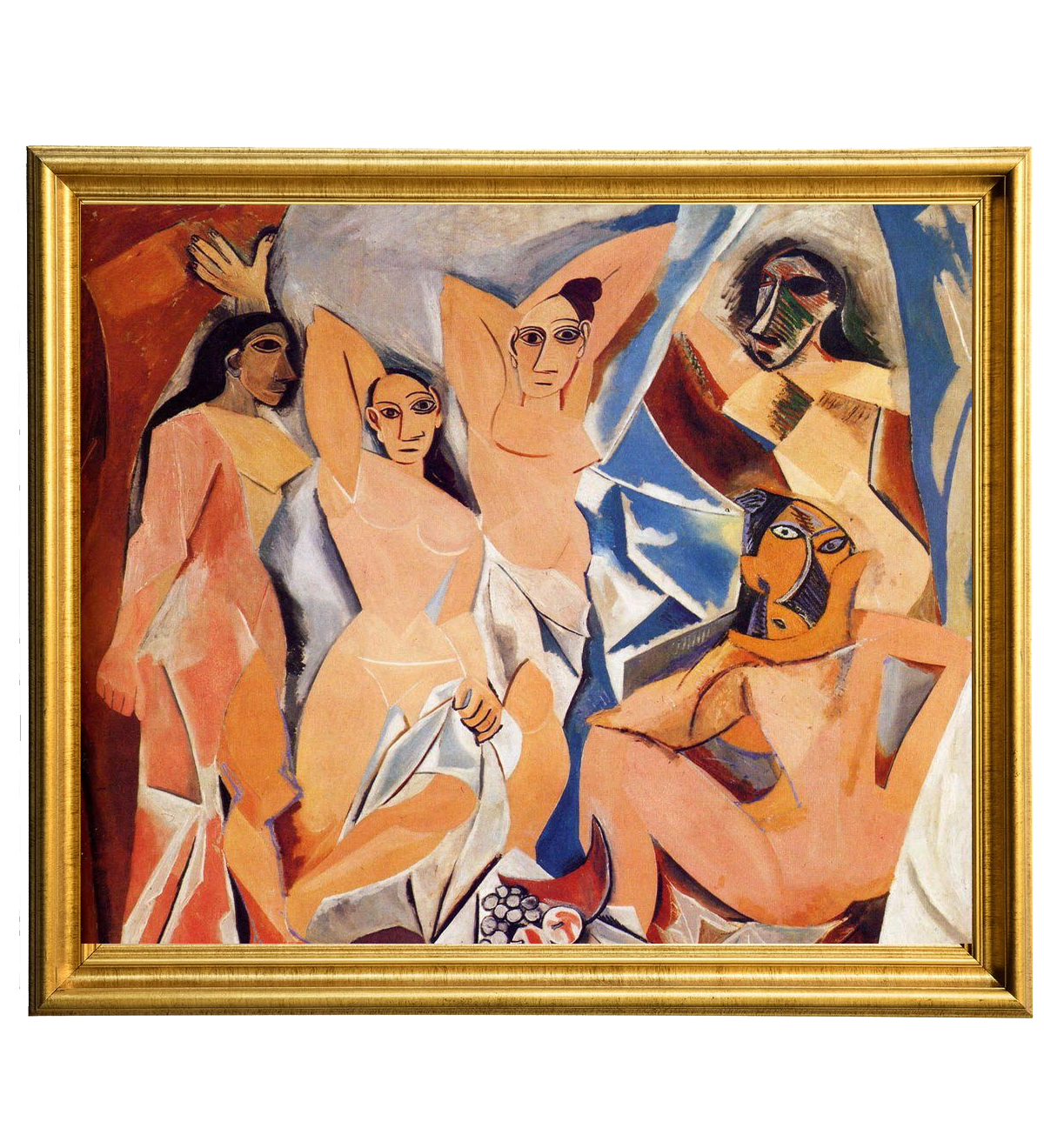
1. Les Demoiselles d’Avignon (1907)
Caption: “Les Demoiselles d’Avignon” — Picasso breaks traditional ideas of beauty and perspective using sharp shapes and distorted figures, helping pave the way for Cubism.
Georges Braque
(1882–1963)
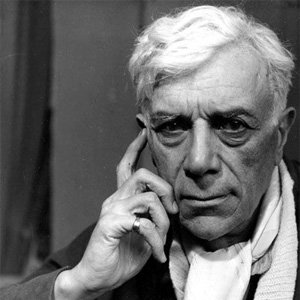
Georges Braque worked closely with Picasso to develop Cubism. His paintings explored form, perspective, and structure through muted colours and fragmented objects.
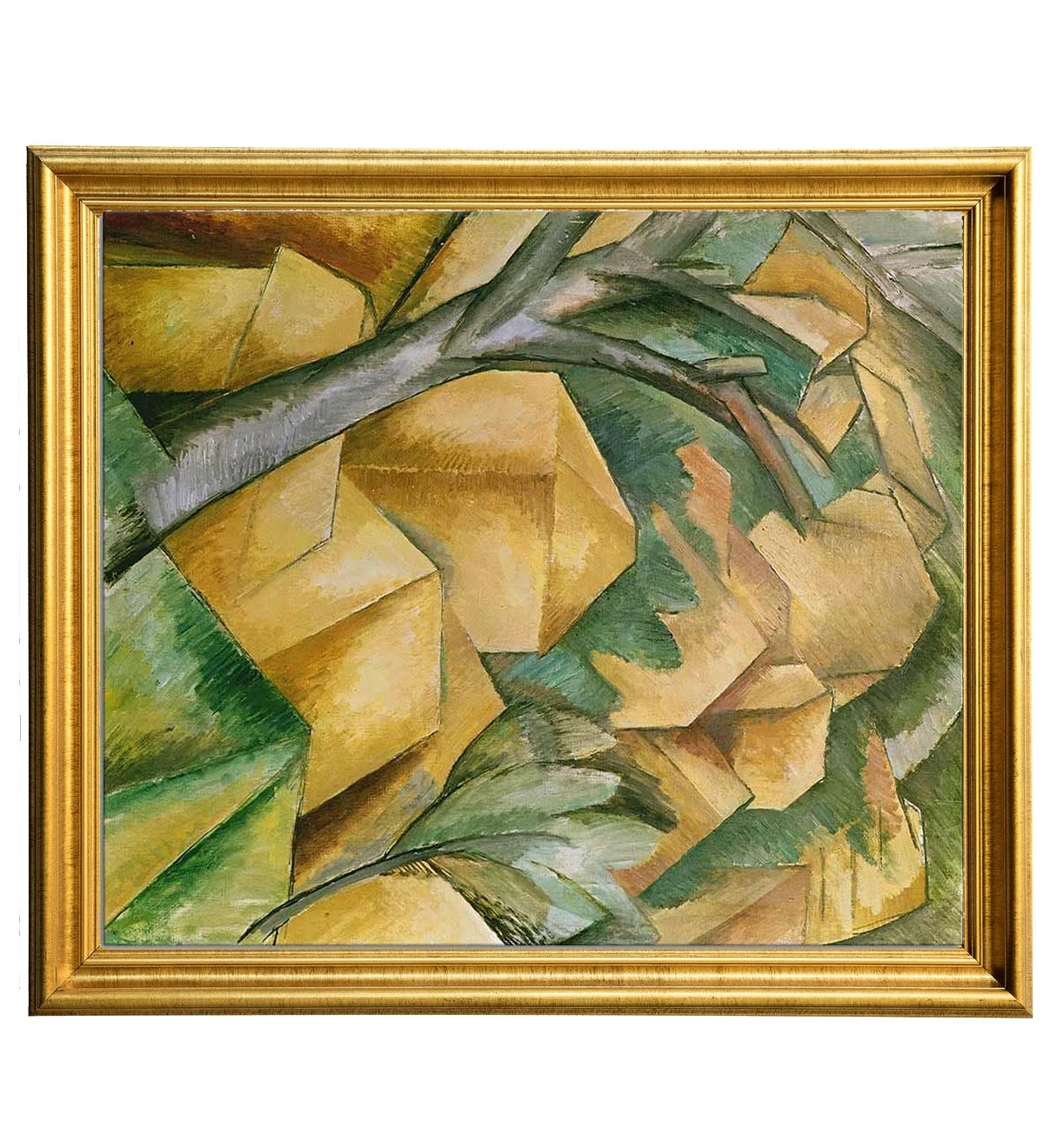
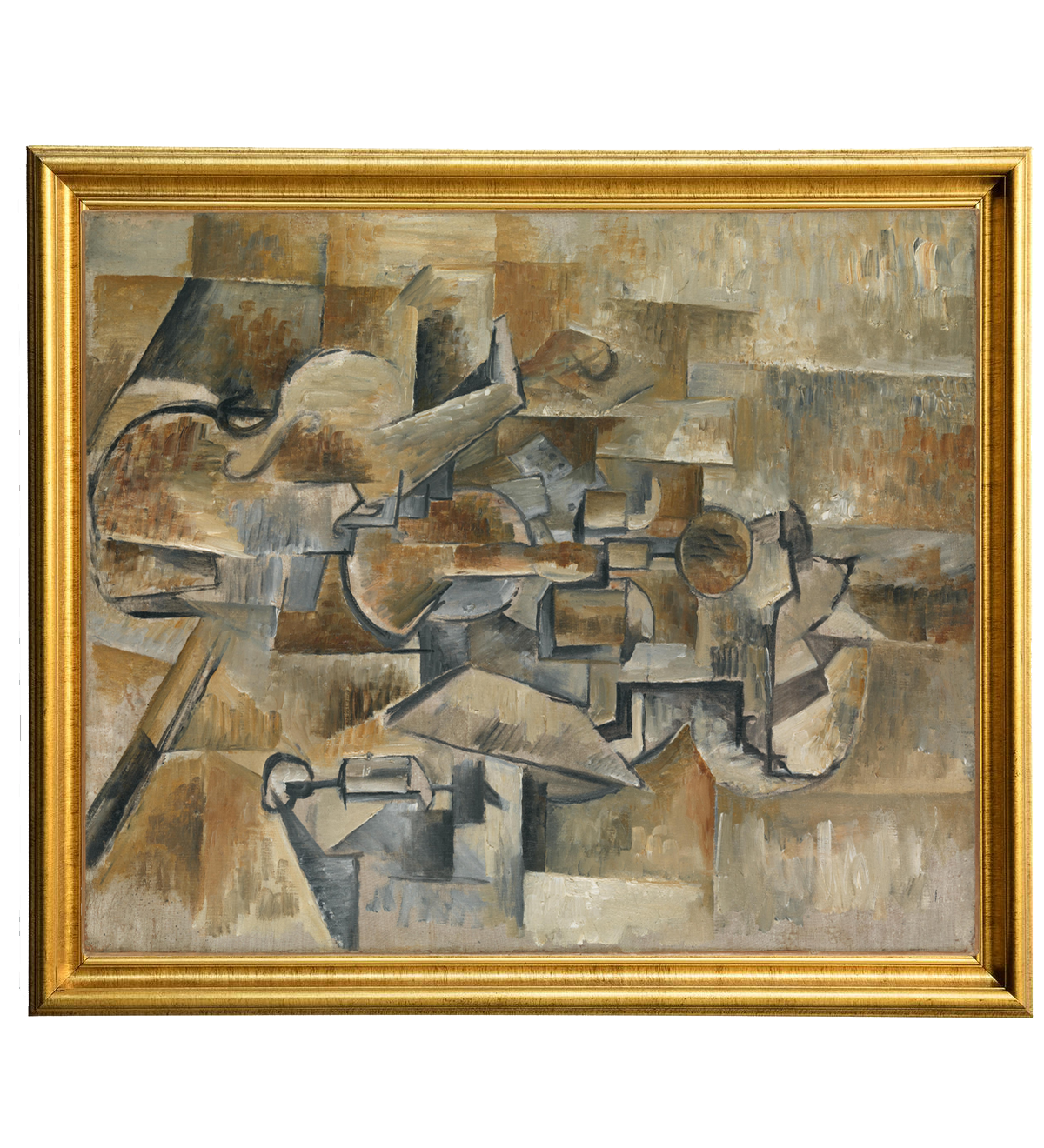
1. Houses at L’Estaque (1908)
Caption: “Houses at L’Estaque” — Braque simplifies the landscape into geometric shapes and earthy colours, helping develop the early style of Cubism.
Influences
-Historical Influence
Scientific discoveries and new ways of thinking about space and time encouraged artists to experiment with perspective.
-Social Influence
Artists rejected traditional academic painting and searched for innovative ways to represent reality.
-Geographical Influence
Cubism originated in Paris, France, which was the centre of artistic innovation during the early twentieth century.
-Philosophical Influence
Cubists believed reality could be understood from multiple viewpoints rather than a single perspective.
-Artistic Influence
Cubism was influenced by:
• Paul Cézanne’s geometric simplification of nature
• African tribal masks and sculptures
• Iberian art
• Post-Impressionism
Insight
and conclution.
Student Insight
I think Cubism is one of the most important art movements because it completely changed how artists represented the world. Instead of copying reality, Cubist artists encouraged viewers to think differently by showing multiple perspectives in a single artwork.Cubism revolutionised modern art by introducing geometric forms and multiple viewpoints. Through the work of Pablo Picasso and Georges Braque, the movement challenged traditional ideas of perspective and inspired later movements such as Futurism, Constructivism, and Abstract Art.
Futurism
Futurism
Futurism was an avant-garde art movement that began in Italy in 1909. It celebrated speed, technology, industry, youth, and modern life. Futurist artists rejected the traditions of the past and embraced the excitement of the machine age. Their artworks often depict movement, energy, and the fast pace of the modern world.
Historical and
Social Context
Futurism was founded after the publication of the Futurist Manifesto by Italian poet Filippo Tommaso Marinetti in 1909. Europe was experiencing rapid industrialisation, technological innovation, and the rise of automobiles, trains, and aeroplanes.
The Futurists believed that modern technology represented the future and wanted to break away from classical art traditions. They admired speed and progress, believing that art should reflect the energy of contemporary life.
• Depiction of movement and speed
• Dynamic compositions
• Geometric forms
• Bold colours
• Repeated lines and shapes to suggest motion
• Inspiration from machines and technology
• Modern urban subjects
• Energetic brushstrokes
• Fragmentation influenced by Cubism
• Celebration of progress and innovation
Main
Characteristics
Major Artists
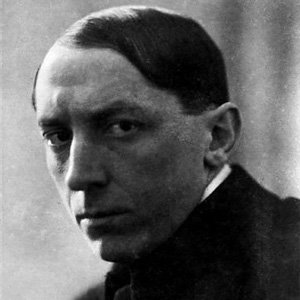
Umberto Boccioni
(1882–1916)
Boccioni was one of the leading Futurist artists and sculptors. His work explored movement, energy, and the relationship between objects and their surroundings.
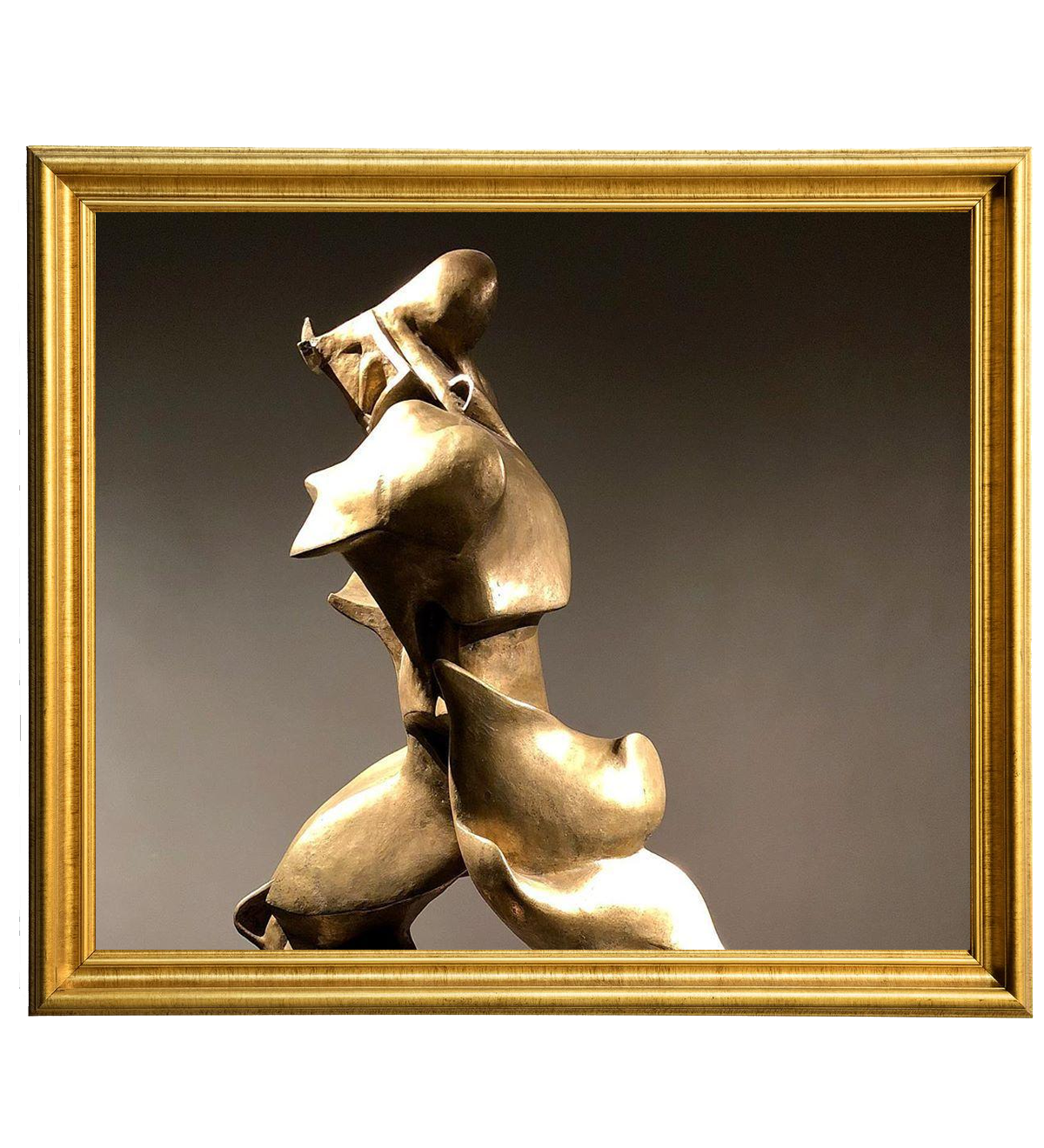
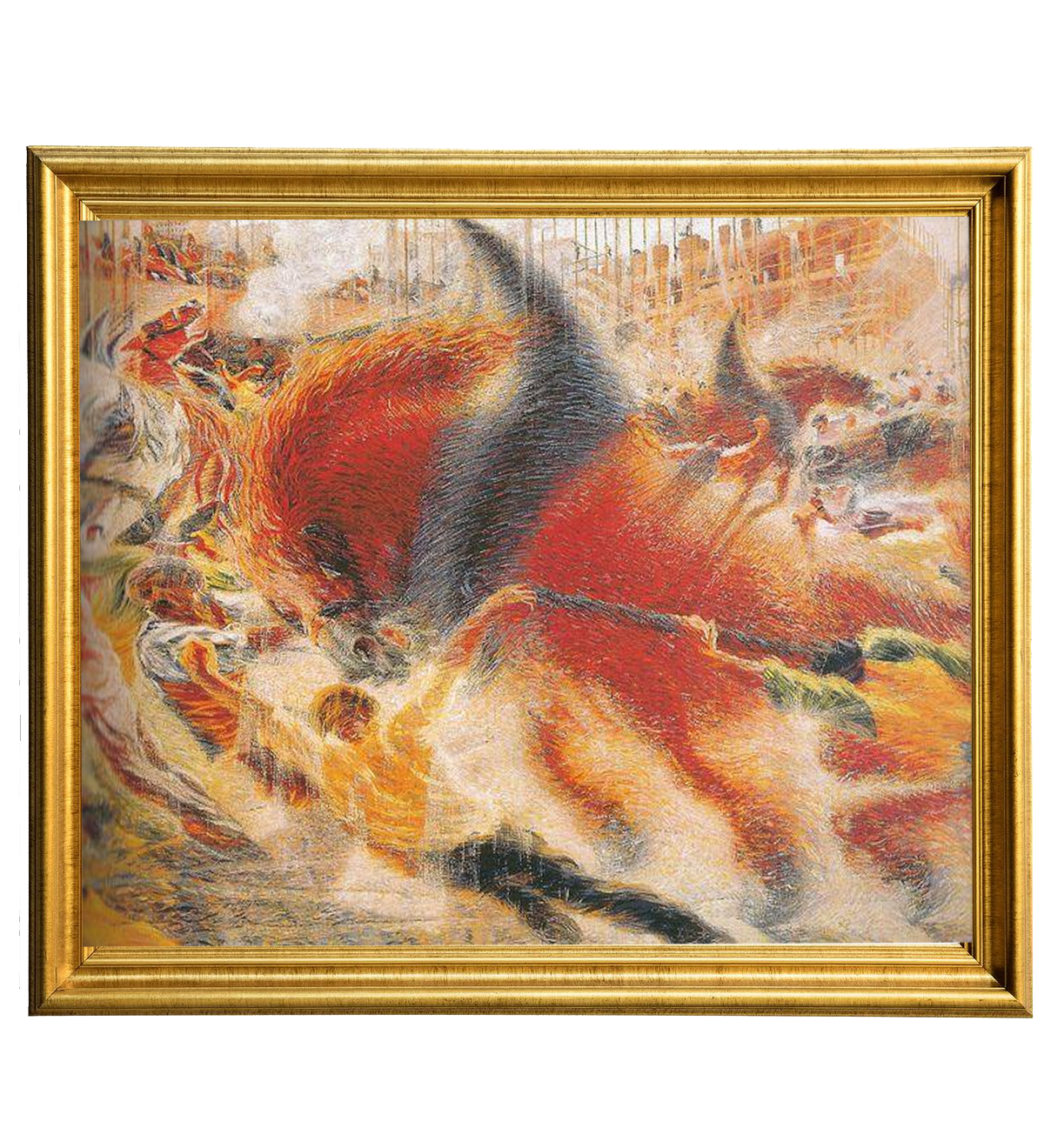
1. Unique Forms of Continuity in Space (1913)
Caption: “Unique Forms of Continuity in Space” — Boccioni captures movement and speed through flowing, distorted forms, showing the energy of modern life.
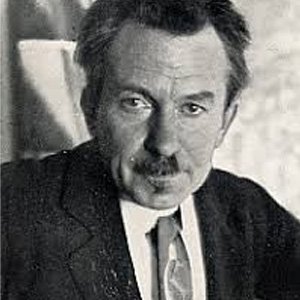
Giacomo Balla
(1871–1958)
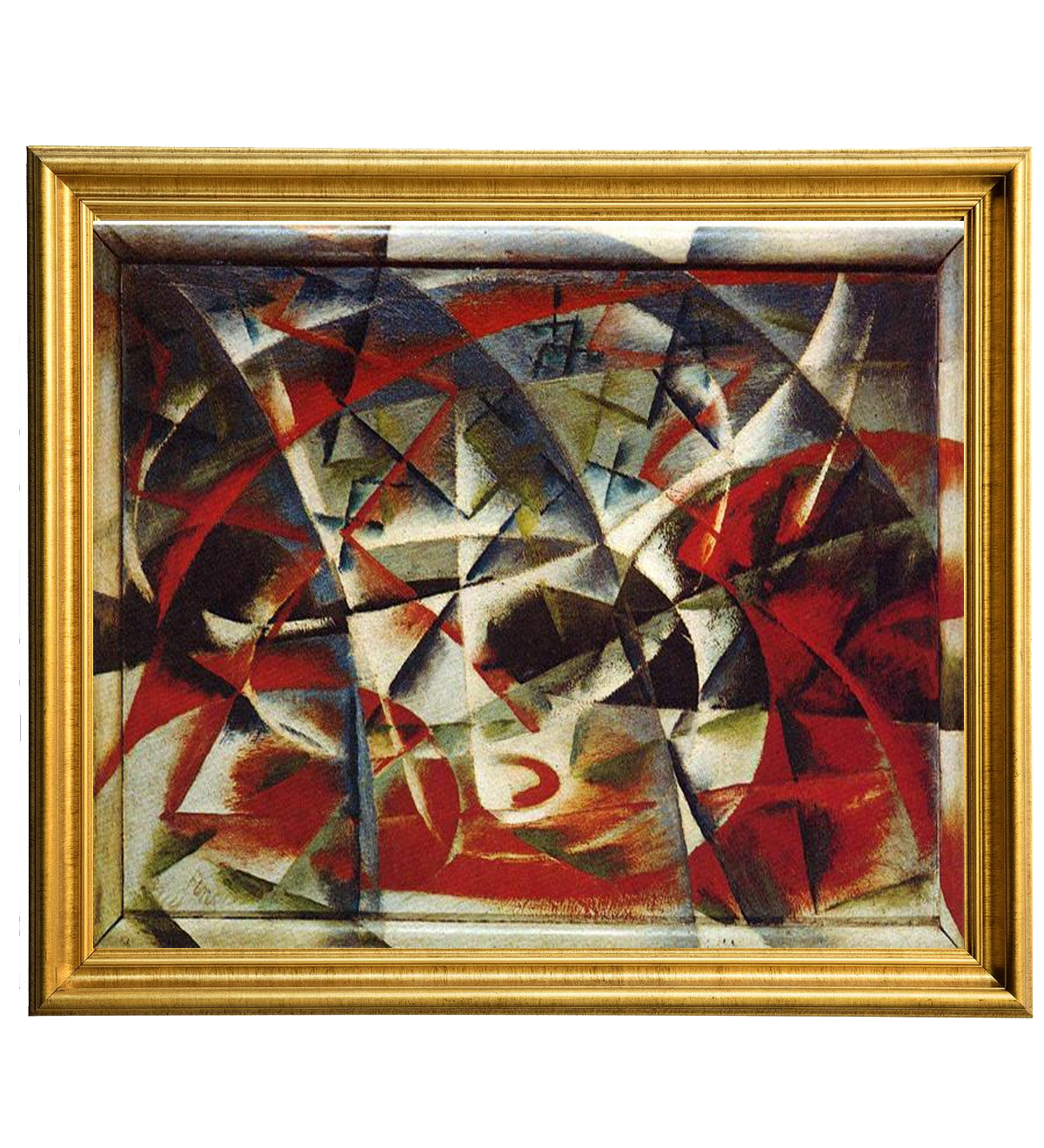
Balla focused on capturing movement and light through repeated forms and vibrant colours.
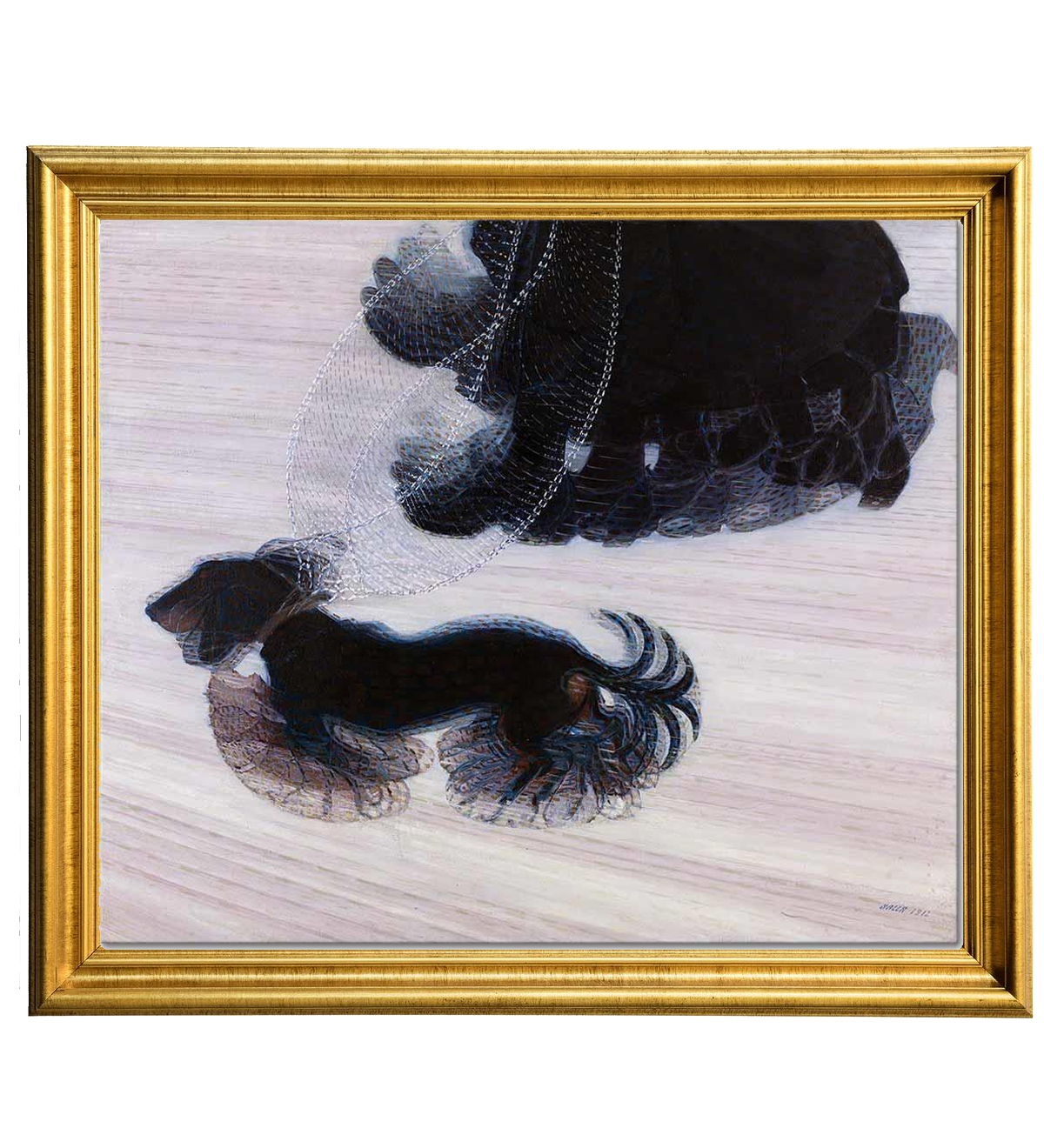
1. Dynamism of a Dog on a Leash (1912)
Caption: “Dynamism of a Dog on a Leash” — Balla shows movement through repeated shapes and lines, making the dog and its owner appear to move rapidly.
Influences
-Historical Influence
Industrialisation and technological advancements transformed everyday life.
-Social Influence
The growth of cities and modern transportation inspired artists to celebrate speed and innovation.
-Geographical Influence
Futurism originated in Italy, particularly in cities such as Milan.
-Philosophical Influence
The movement believed that the future was more important than the past and that art should embrace change and progress.
-Artistic Influence
Futurism was influenced by:
• Cubism
• Neo-Impressionism
• Industrial design
• Modern engineering
Insight
and conclution.
Student Insight
I think Futurism is important because it celebrated the excitement of modern life and encouraged artists to experiment with movement and technology. It showed that art could capture energy and speed instead of stillness.Futurism transformed modern art by celebrating movement, technology, and innovation. Artists such as Umberto Boccioni and Giacomo Balla created energetic works that reflected the rapidly changing world and inspired later movements such as Constructivism and Vorticism.
Dada
dada
Dada was an anti-art movement that began in Zurich, Switzerland, around 1916 during World War I. It rejected traditional ideas about art, logic, and society. Dada artists believed that the horrors of war proved that reason and conventional values had failed. Instead, they created artworks that were humorous, absurd, shocking, and thought-provoking.
Historical and
Social Context
Dada emerged during World War I when many artists and intellectuals fled to neutral Switzerland.They were deeply affected by the violence and destruction of the war and protested against the political systems they believed had caused it.
Rather than creating beautiful artworks, Dada artists challenged viewers to question the meaning of art itself. Their unconventional ideas later became highly influential in modern and contemporary art.
• Rejection of traditional art
• Absurdity and humour
• Found objects (Readymades)
• Collage and photomontage
• Chance and randomness
• Satire and political criticism
• Experimental techniques
• Performance art
• Anti-war themes
• Concept over appearance
Main
Characteristics
Major Artists
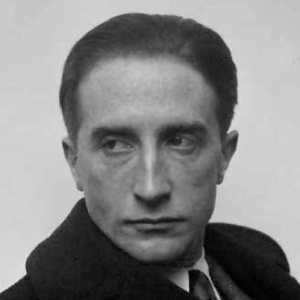
Marcel Duchamp
(1887–1968)
Marcel Duchamp became famous for introducing Readymades—ordinary manufactured objects presented as art. He challenged traditional definitions of what art could be.
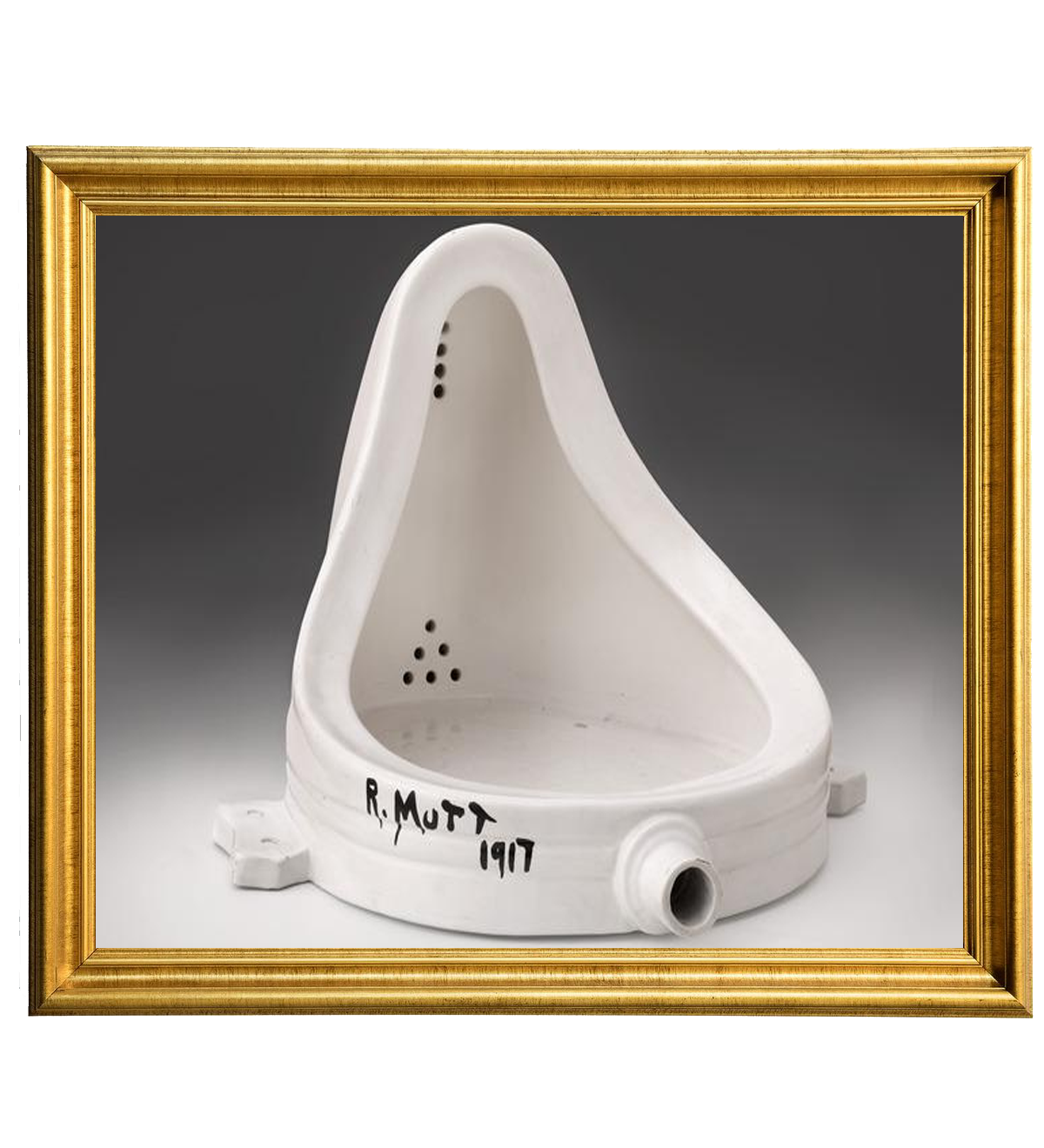
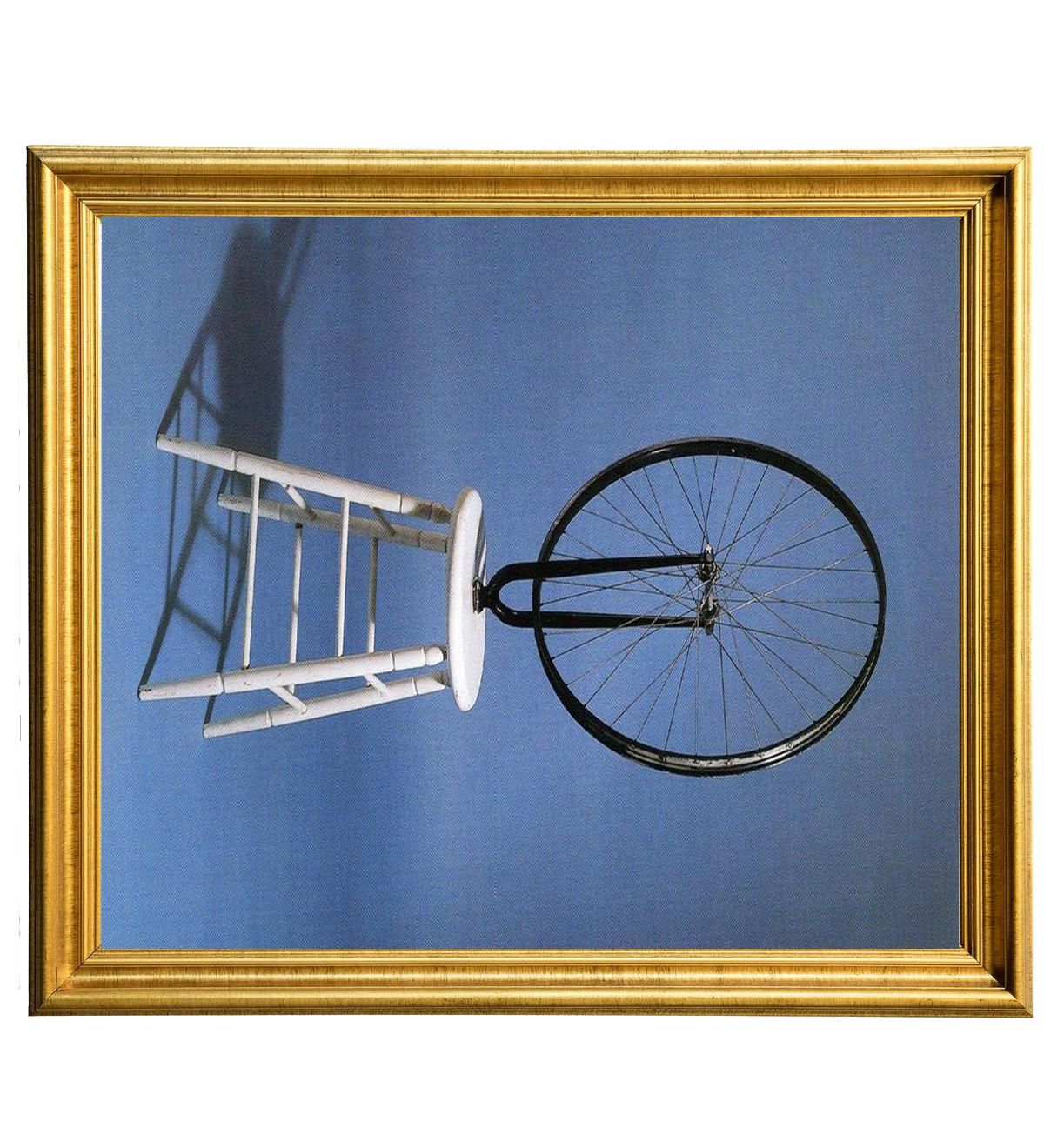
1. Fountain (1917)
Caption: “Fountain” — Duchamp turns an ordinary urinal into an artwork, challenging traditional ideas about what can be considered art.
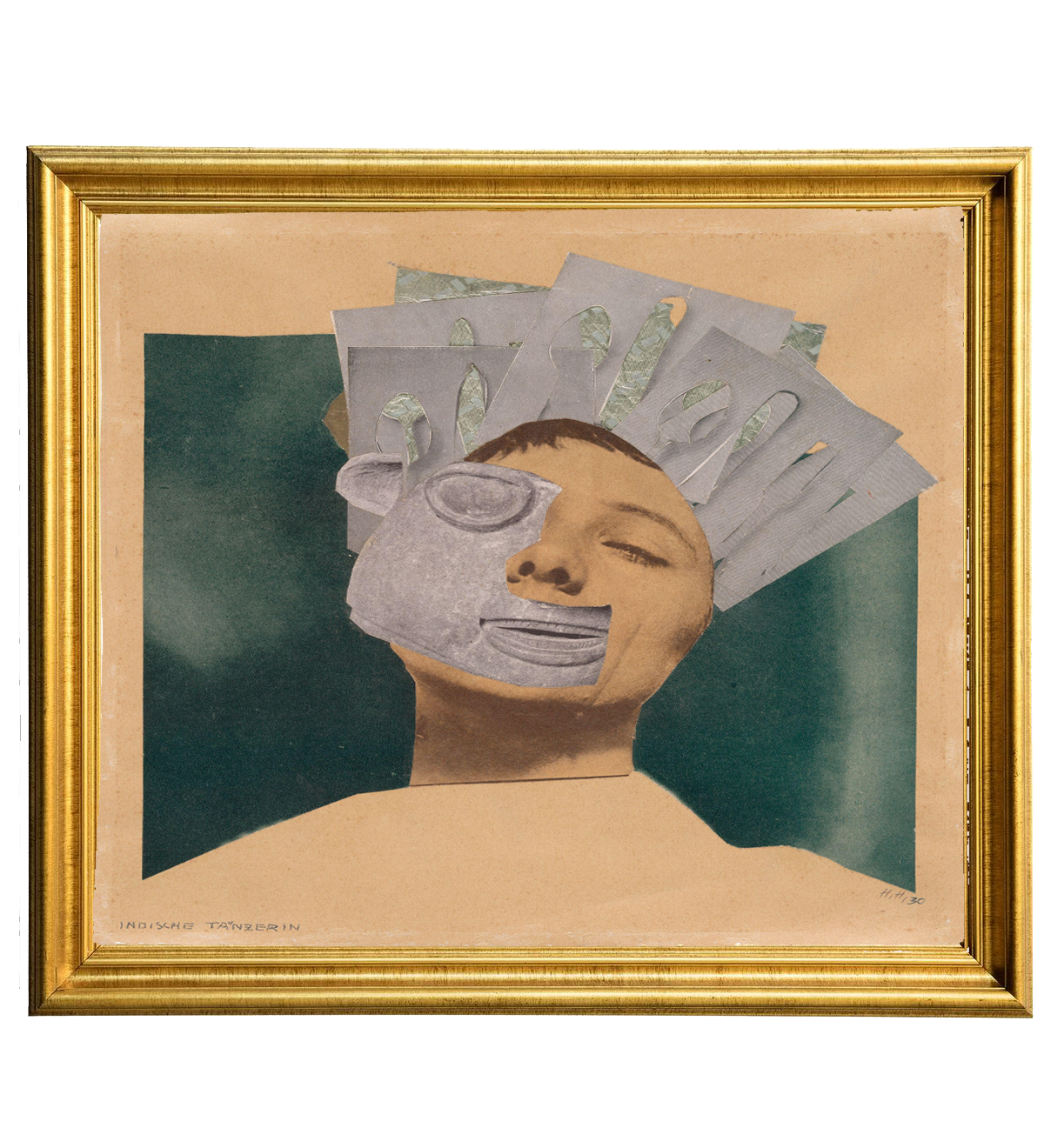
Hannah Höch
(1889–1978)
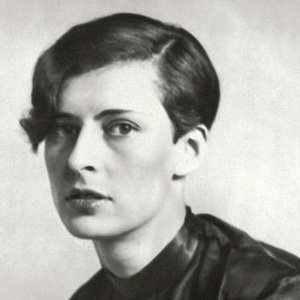
Hannah Höch was a pioneer of photomontage. Her work explored politics, gender roles, and modern society through cut-and-pasted photographs.
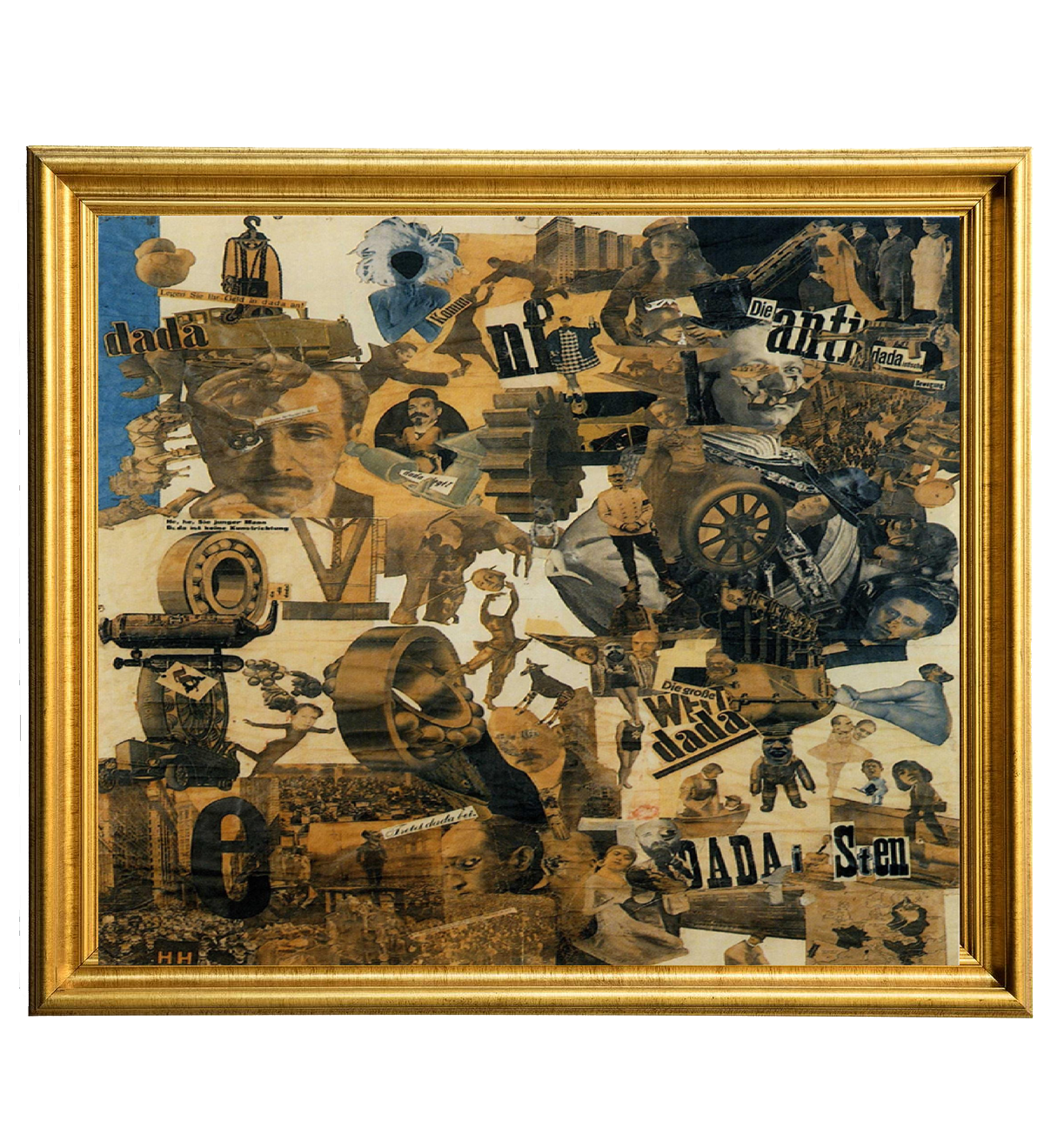
1. Cut with the Kitchen Knife (1919–1920)
Caption: “Cut with the Kitchen Knife” — Höch uses photomontage to combine photographs, text, and political imagery, creating a chaotic critique of German society and politics.
2. Indian Dancer (1930)
Caption: “Indian Dancer” — Höch combines photographic images and bold colours to explore identity, culture, and the influence of modern mass media.
Influences
-Historical Influence
World War I inspired artists to reject traditional values that they believed had contributed to conflict.
-Social Influence
Artists criticised authority, nationalism, and conventional culture through satire and experimentation.
-Geographical Influence
Dada began in Zurich and later spread to Berlin, Paris, and New York.
-Philosophical Influence
The movement embraced irrationality, chance, and freedom of expression while questioning the very nature of art.
-Artistic Influence
Dada was influenced by:
• Cubism
• Futurism
• Expressionism
• Political activism
Insight
and conclution.
Student Insight
I think Dada is important because it challenged people to think differently about art. It proved that an idea can be more important than technical skill, influencing many later movements such as Conceptual Art and Surrealism.Dada revolutionised modern art by rejecting traditional artistic rules and encouraging experimentation. Through artists such as Marcel Duchamp and Hannah Höch, the movement changed the way people think about creativity and the purpose of art.
Abstract Art
Abstract Art
Abstract Art is a modern art movement that developed during the early 20th century (around 1910 onwards). Instead of portraying people, objects, or landscapes realistically, Abstract artists used colours, lines, shapes, and forms to express emotions, ideas, and spirituality. The movement encouraged viewers to interpret artworks in their own way.
Historical and
Social Context
Abstract Art emerged as artists searched for new ways to express ideas beyond realistic representation. Influenced by movements such as Expressionism and Cubism, artists believed that art did not need to imitate nature to be meaningful.
The movement grew during a time of rapid technological, scientific, and cultural change. Many artists felt that traditional art no longer reflected the modern world and began experimenting with pure colour, shape, and composition.
• Non-representational imagery
• Geometric or organic shapes
• Bold colours
• Expressive lines
• Focus on emotion and ideas
• Simplified forms
• Balance and composition
• Freedom from realism
• Symbolism
• Open to personal interpretation
Main
Characteristics
Major Artists
Wassily Kandinsky
(1866–1944)
Kandinsky believed colours and shapes could express emotions without representing real objects. He became one of the pioneers of abstract art.
1. Composition VII (1913)
Caption: “Composition VII” — Kandinsky creates a powerful abstract world of swirling shapes and vibrant colours, expressing emotion through movement and form.
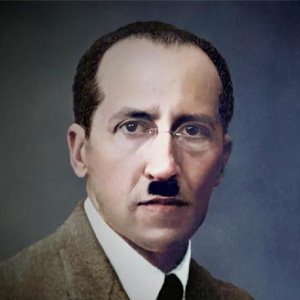
Piet Mondrian
(1872–1944)
Mondrian created geometric abstract paintings using straight black lines and primary colours. His work became known as Neo-Plasticism.
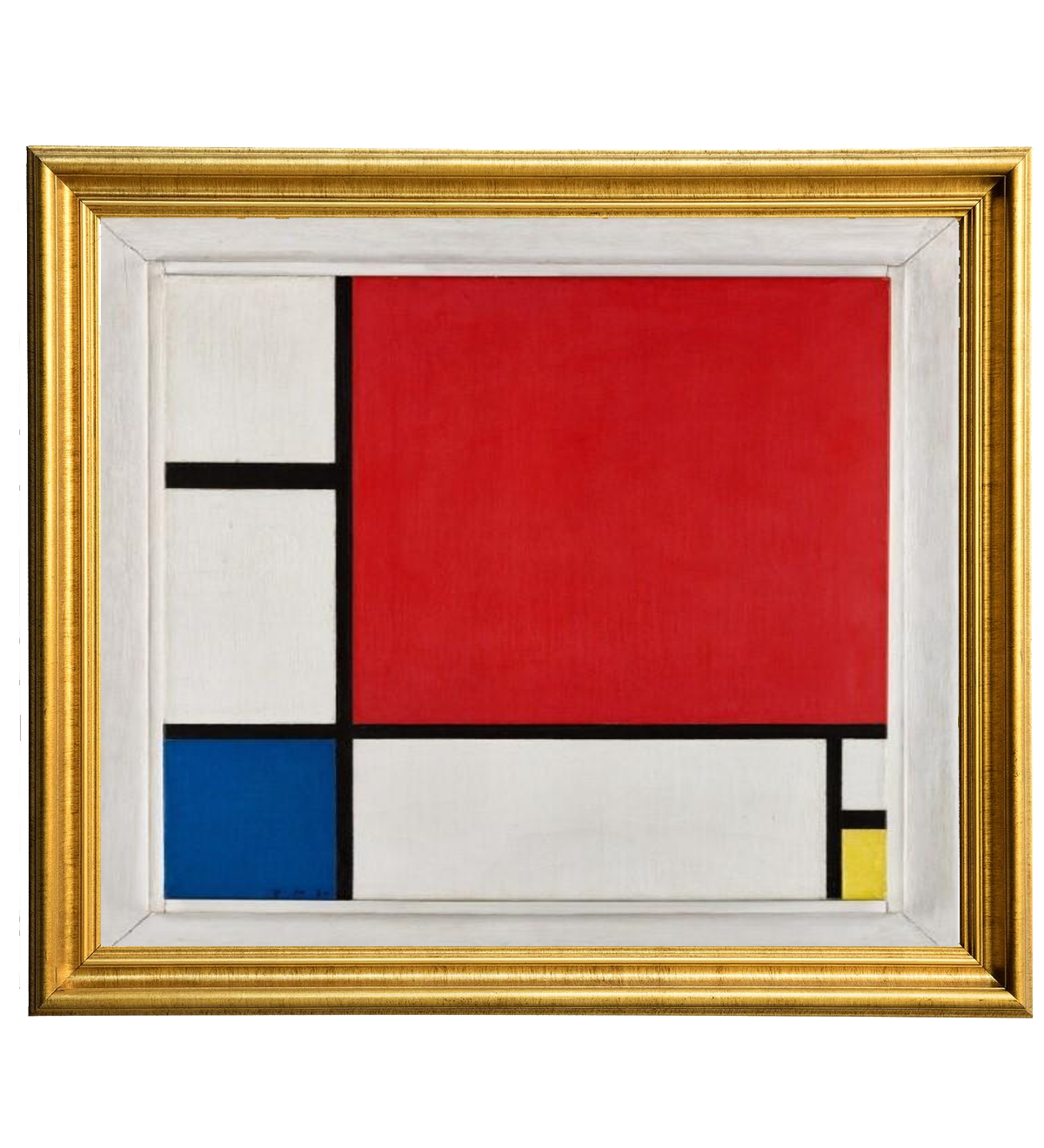
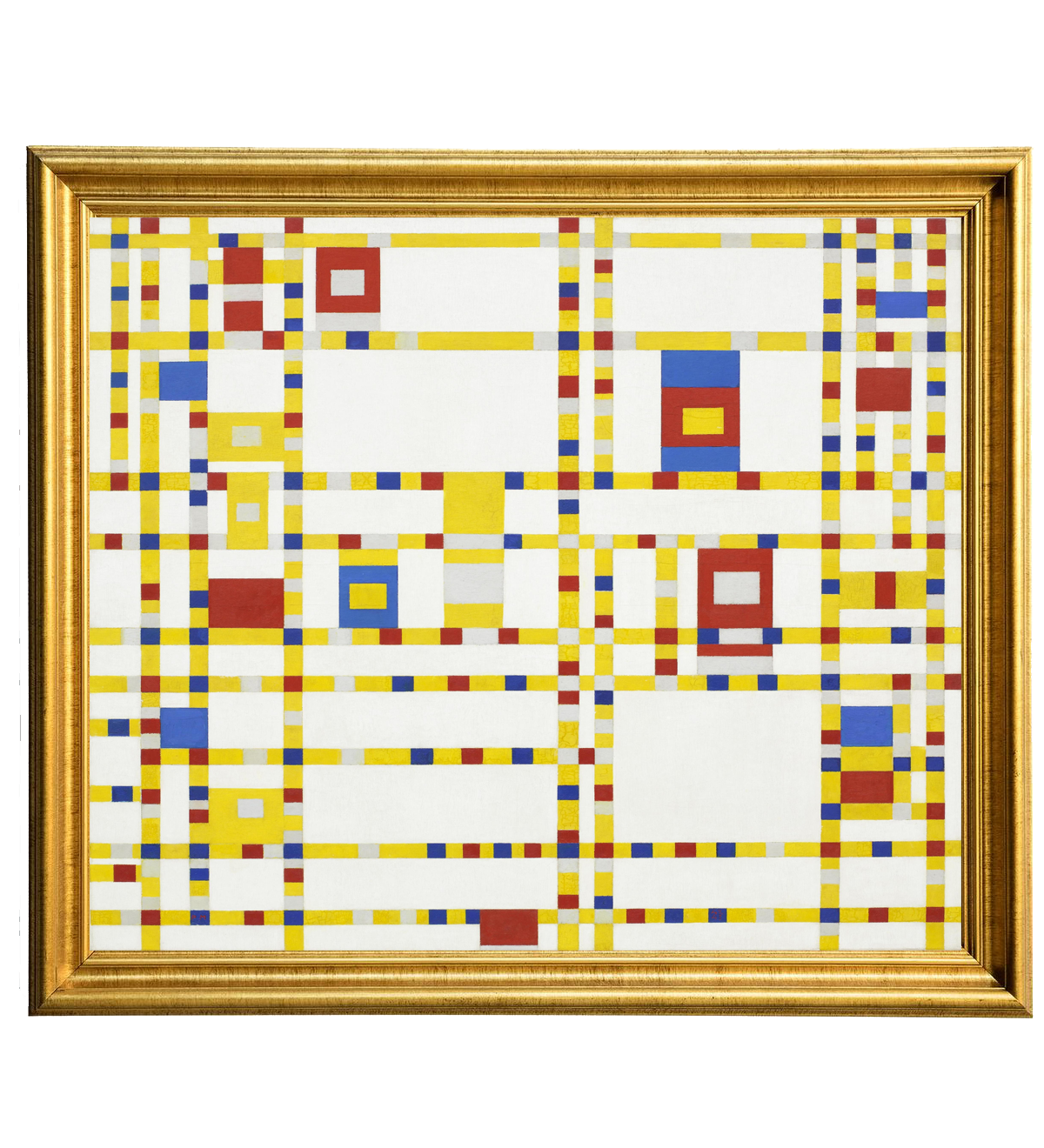
1. Composition with Red, Blue and Yellow (1930)
Caption: “Composition with Red, Blue and Yellow” — Mondrian uses simple lines, squares, and primary colours to create a clean and balanced abstract composition.
Influences
-Historical Influence
Rapid scientific discoveries and modernisation encouraged artists to rethink traditional art.
-Social Influence
Artists wanted freedom to express ideas without being limited by realistic representation.
-Geographical Influence
Abstract Art developed across Europe, particularly in Germany, Russia, and the Netherlands.
-Philosophical Influence
Many artists believed art should communicate universal emotions and spiritual ideas rather than simply copy nature.
-Artistic Influence
Abstract Art was influenced by:
• Expressionism
• Cubism
• Fauvism
• Music and spirituality
Insight
and conclution.
Student Insight
I think Abstract Art is important because it allows viewers to create their own meanings instead of being told exactly what to see. It encourages creativity, imagination, and emotional expression.Abstract Art transformed modern art by proving that paintings do not need to represent real objects to have meaning. Through artists such as Wassily Kandinsky and Piet Mondrian, the movement inspired many later styles, including Abstract Expressionism and Minimalism.
Pop Art
Pop Art
Pop Art was an art movement that emerged in Britain and the United States during the 1950s and 1960s. It drew inspiration from popular culture, including advertising, comic books, television, music, celebrities, and consumer products. Pop artists challenged the distinction between fine art and everyday life by turning ordinary objects and media images into works of art.
Historical and
Social Context
After World War II, consumer culture expanded rapidly. Television, magazines, advertising, and mass production became a major part of everyday life. Pop artists embraced these changes by using familiar images from popular culture instead of traditional artistic subjects.
The movement was a reaction against the emotional seriousness of Abstract Expressionism, replacing it with bold, colourful, and often humorous imagery.
• Bright, bold colours
• Popular culture imagery
• Comic book style
• Advertising and brand logos
• Celebrity portraits
• Everyday consumer products
• Repetition of images
• Flat colours
• Humour and irony
• Screen-printing and commercial techniques
Main
Characteristics
Major Artists
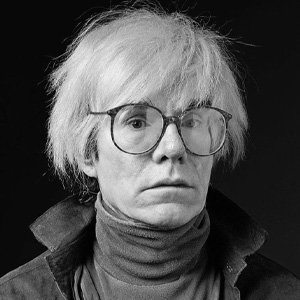
Andy Warhol
(1928–1987)
Andy Warhol became the most famous Pop artist by transforming everyday products and celebrities into iconic artworks. He used screen-printing to produce repeated images that reflected mass production.
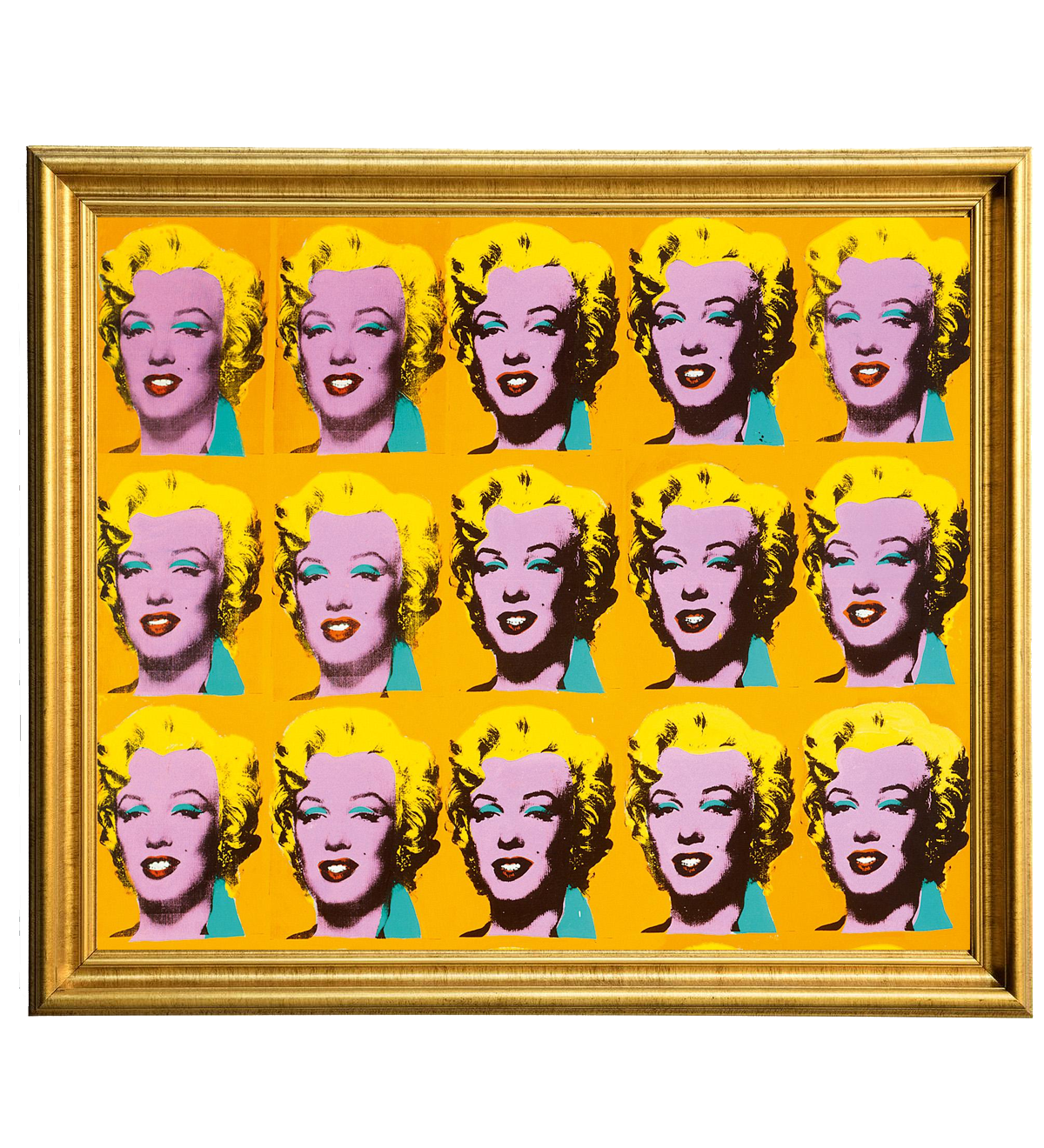
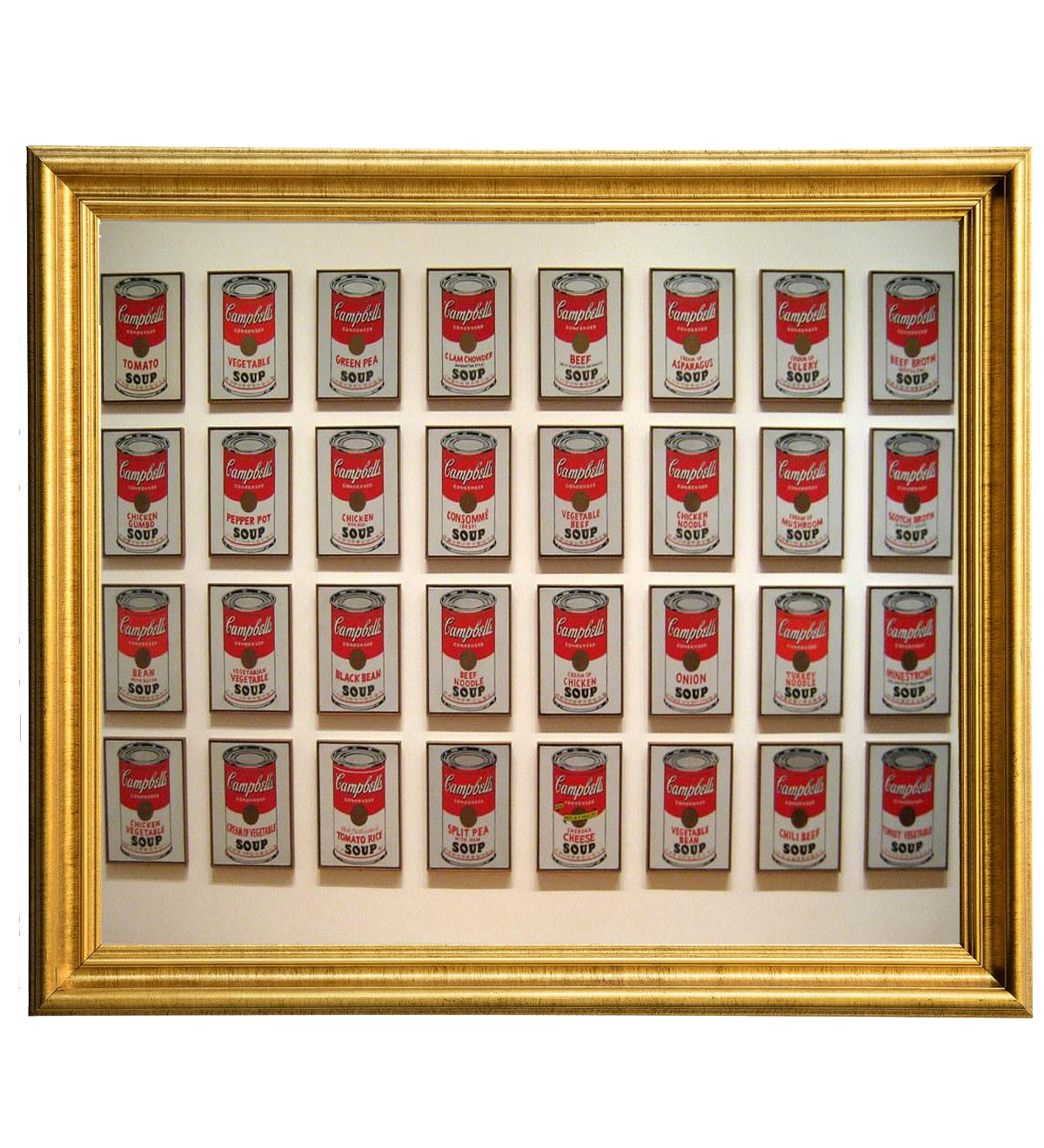
1. Marilyn Diptych (1962)
Caption: “Marilyn Diptych” — Warhol repeats Marilyn Monroe’s image in bright colours and fading tones, exploring fame, celebrity culture, and mass production.
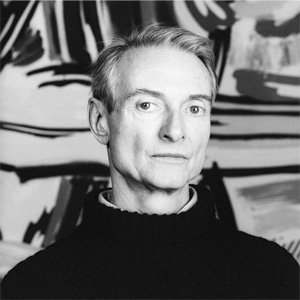
Roy Lichtenstein
(1923–1997)
Lichtenstein created paintings inspired by comic books using bold outlines, bright colours, and Ben-Day dots to imitate commercial printing.
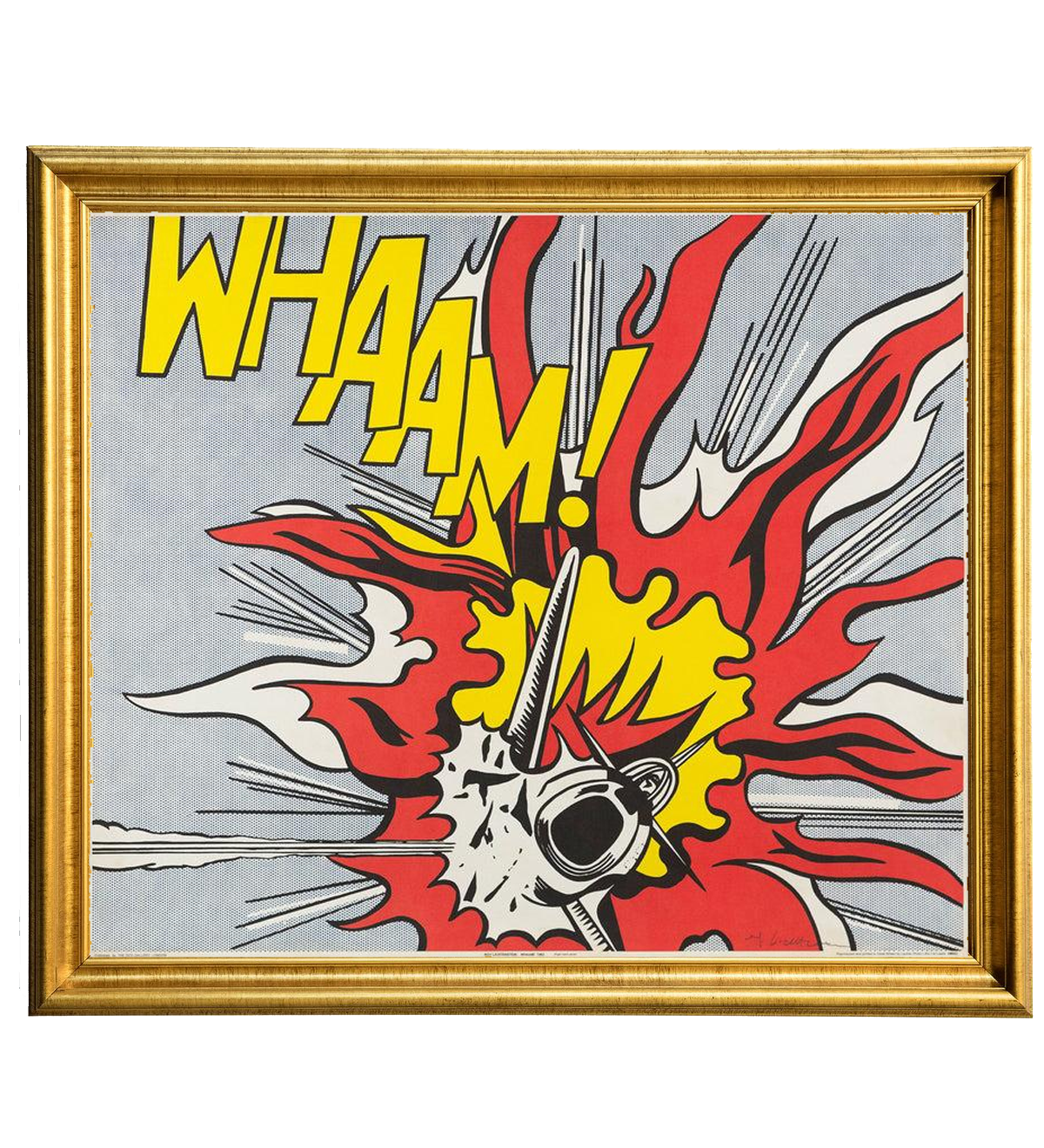
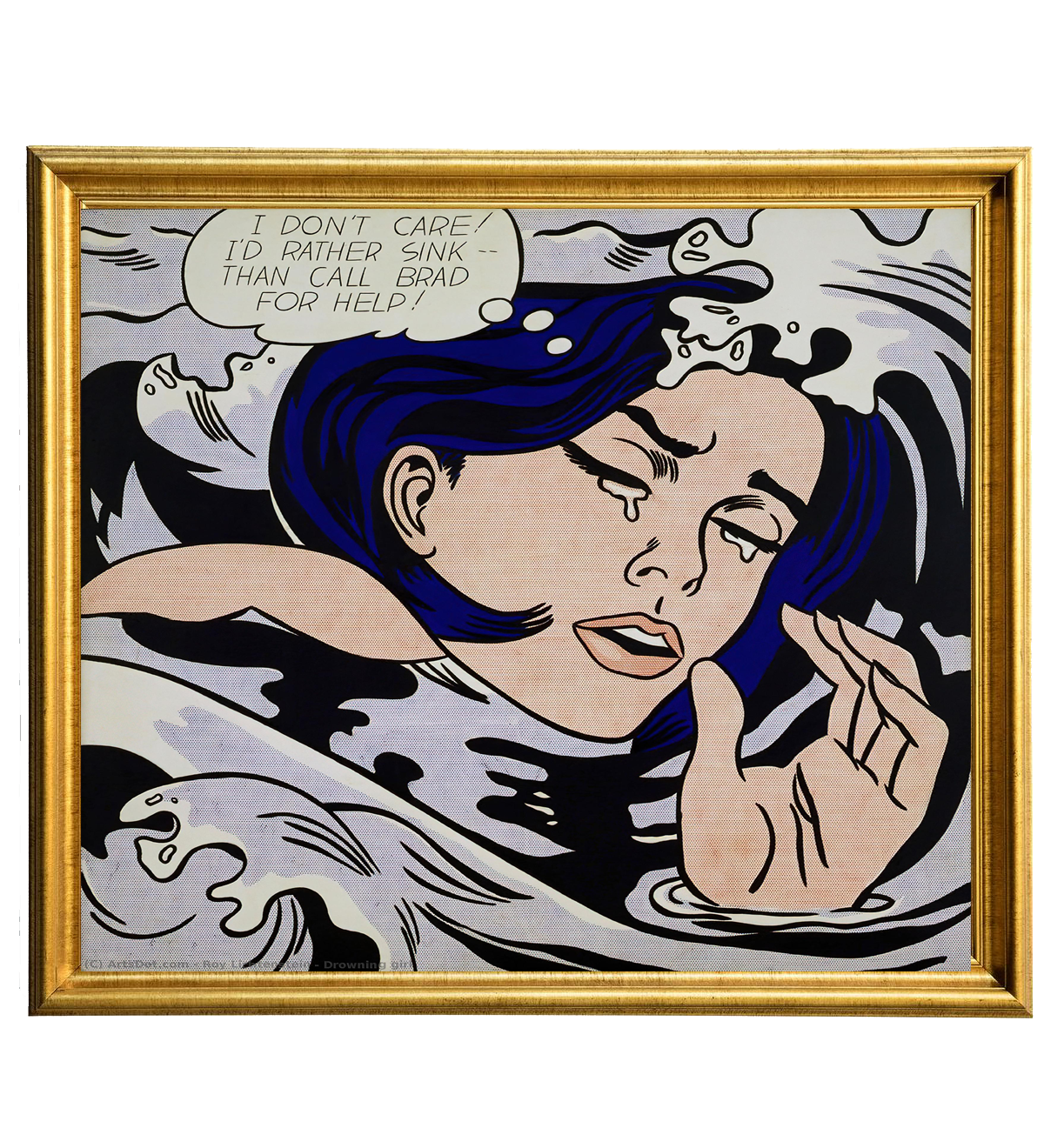
1. Whaam! (1963)
Caption: “Whaam!” — Lichtenstein recreates the bold style of comic books using bright colours, speech bubbles, and Ben-Day dots to show a dramatic action scene.
Influences
-Historical Influence
The rise of television, advertising, and mass production after World War II shaped the movement.
-Social Influence
Consumerism and celebrity culture became major themes in everyday life.
-Geographical Influence
Pop Art began in Britain and quickly spread to the United States, particularly New York.
-Philosophical Influence
Pop artists believed that everyday objects and popular media could be as important as traditional fine art.
-Artistic Influence
Pop Art was influenced by:
• Dada
• Commercial advertising
• Comic books
• Photography
• Consumer culture
Insight
and conclution.
Student Insight
I think Pop Art is important because it shows that inspiration can come from everyday life. It challenged traditional ideas about art and reflected the culture of modern society through familiar images and bright colours.Pop Art transformed modern art by celebrating popular culture and consumer society. Artists such as Andy Warhol and Roy Lichtenstein used commercial techniques and everyday imagery to create memorable artworks that continue to influence graphic design, advertising, and contemporary art.
Conceptual Art
Conceptual Art
Conceptual Art is a modern art movement that emerged during the 1960s and 1970s. Unlike traditional art, where the finished artwork is the main focus, Conceptual Art places the greatest importance on the idea or concept behind the work. The physical artwork may be simple or may not even exist at all as long as the idea is communicated effectively.
Historical and
Social Context
Conceptual Art developed during a time of political change, social activism, and experimentation in the 1960s. Many artists questioned the traditional purpose of art and challenged the idea that a work of art had to be a painting or sculpture.
Influenced by the Dada movement, especially Marcel Duchamp’s Fountain, Conceptual artists believed that ideas were more important than artistic skill or beauty. They explored language, photography, text, performance, installation, and everyday objects as artistic media.
• The idea is more important than the finished artwork.
• Minimal or no traditional artistic techniques.
• Uses text, instructions, photography, or found objects.
• Encourages audience participation.
• Challenges traditional definitions of art.
• Focuses on meaning rather than appearance.
• Often includes performance or installation.
• Questions society, culture, and perception.
• Open to interpretation.
• Emphasises creativity and critical thinking.
Main
Characteristics
Major Artists
Joseph Kosuth
(1945–Present)
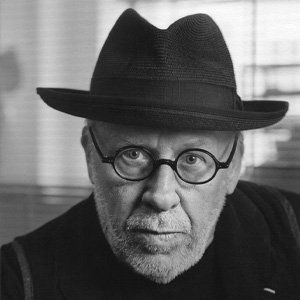
Joseph Kosuth is one of the founders of Conceptual Art. His works explore language, meaning, and how we define
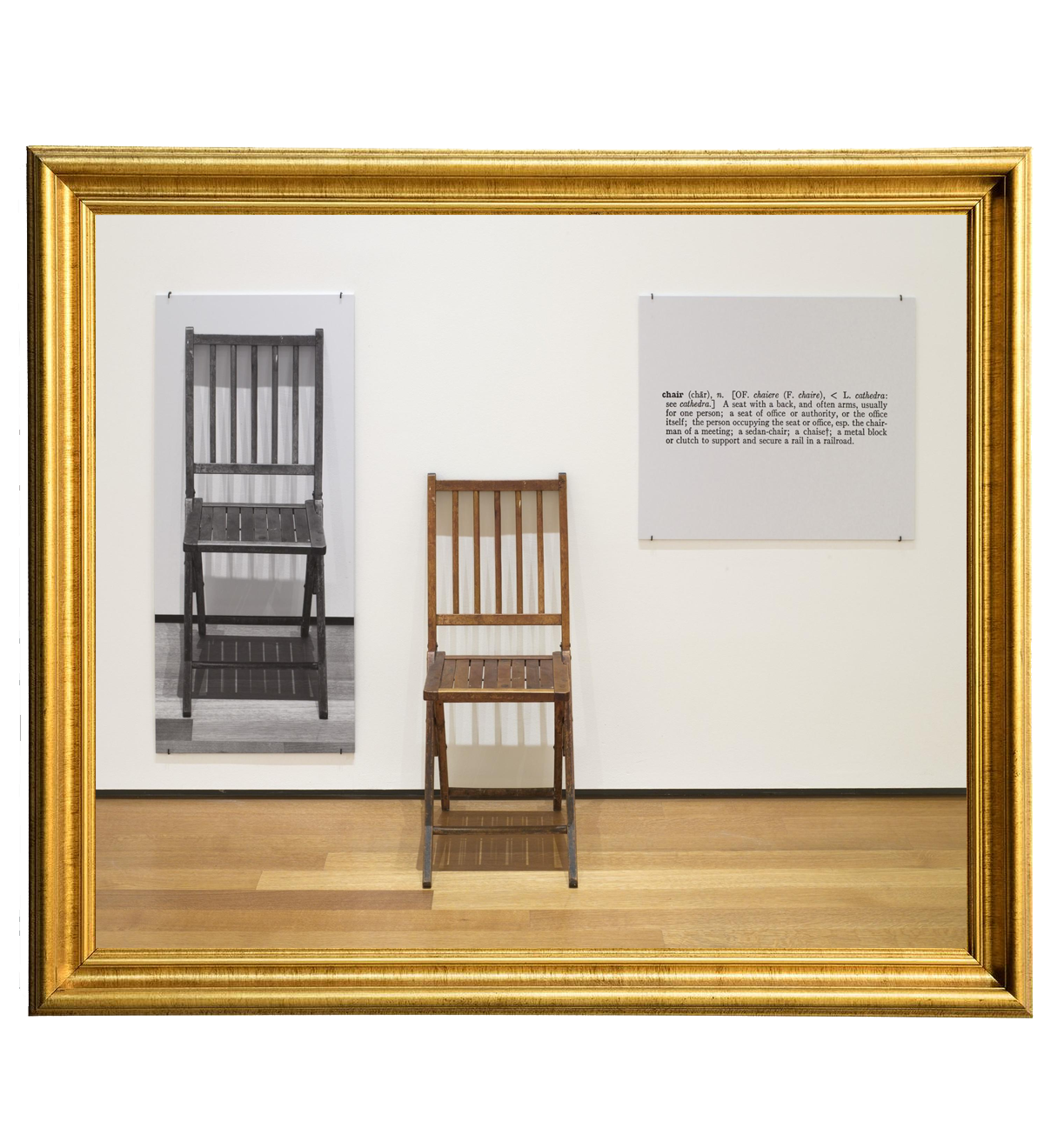
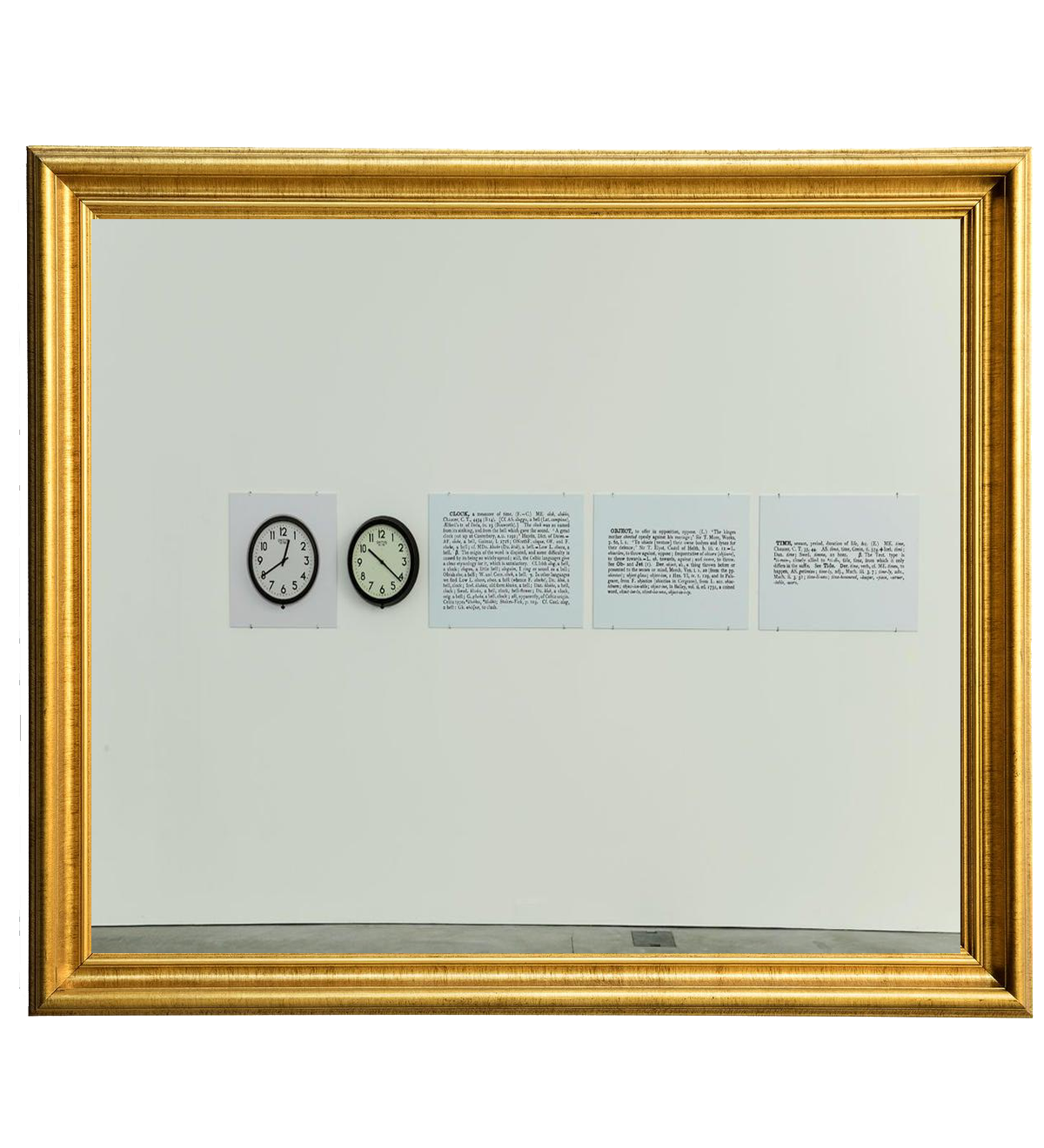
1. One and Three Chairs (1965)
Caption: “One and Three Chairs” — Kosuth presents a real chair, a photograph of the chair, and a dictionary definition, questioning what makes something a work of art.
Joseph Kosuth
(1945–Present)
Joseph Kosuth is one of the founders of Conceptual Art. His works explore language, meaning, and how we define
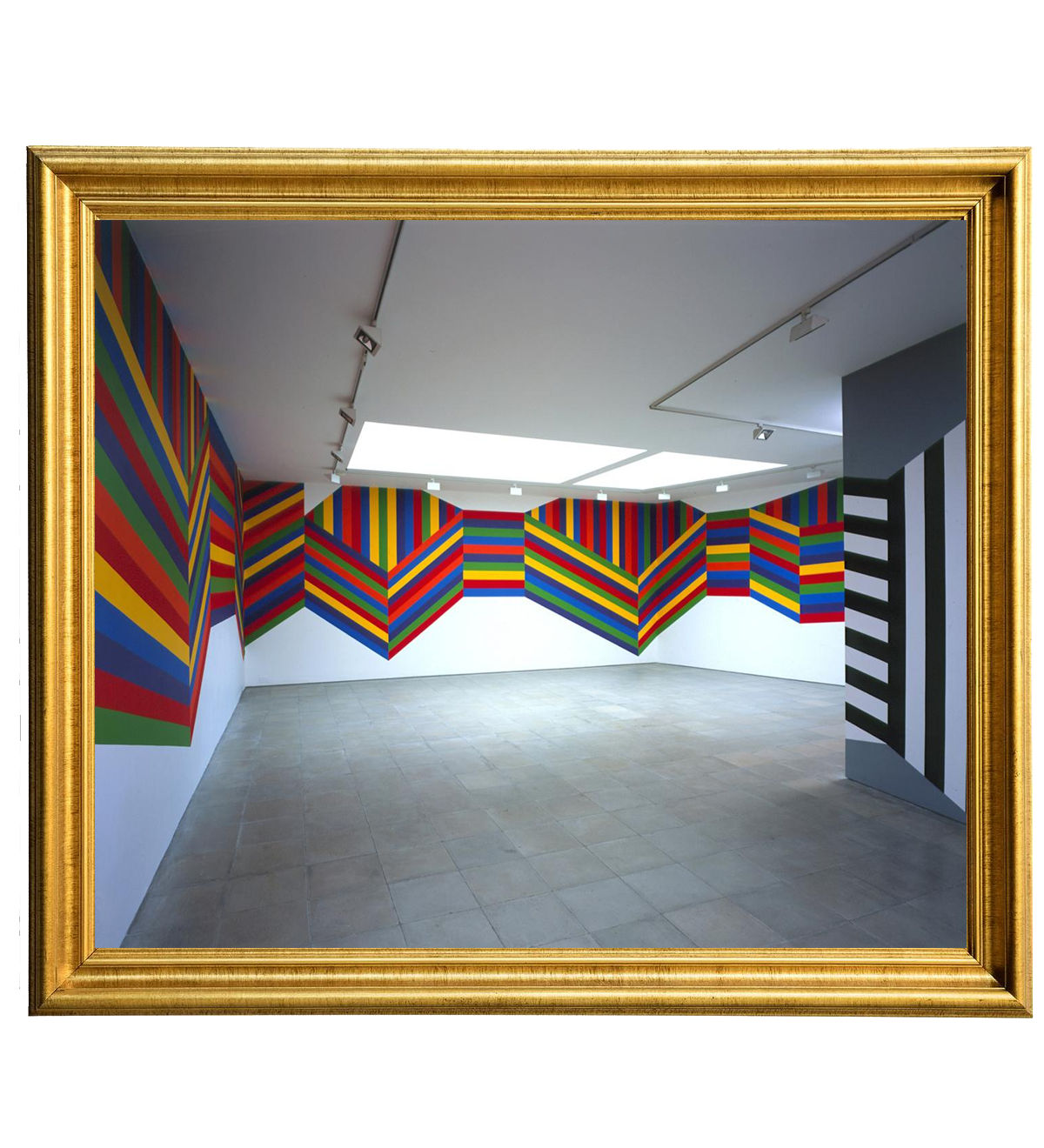
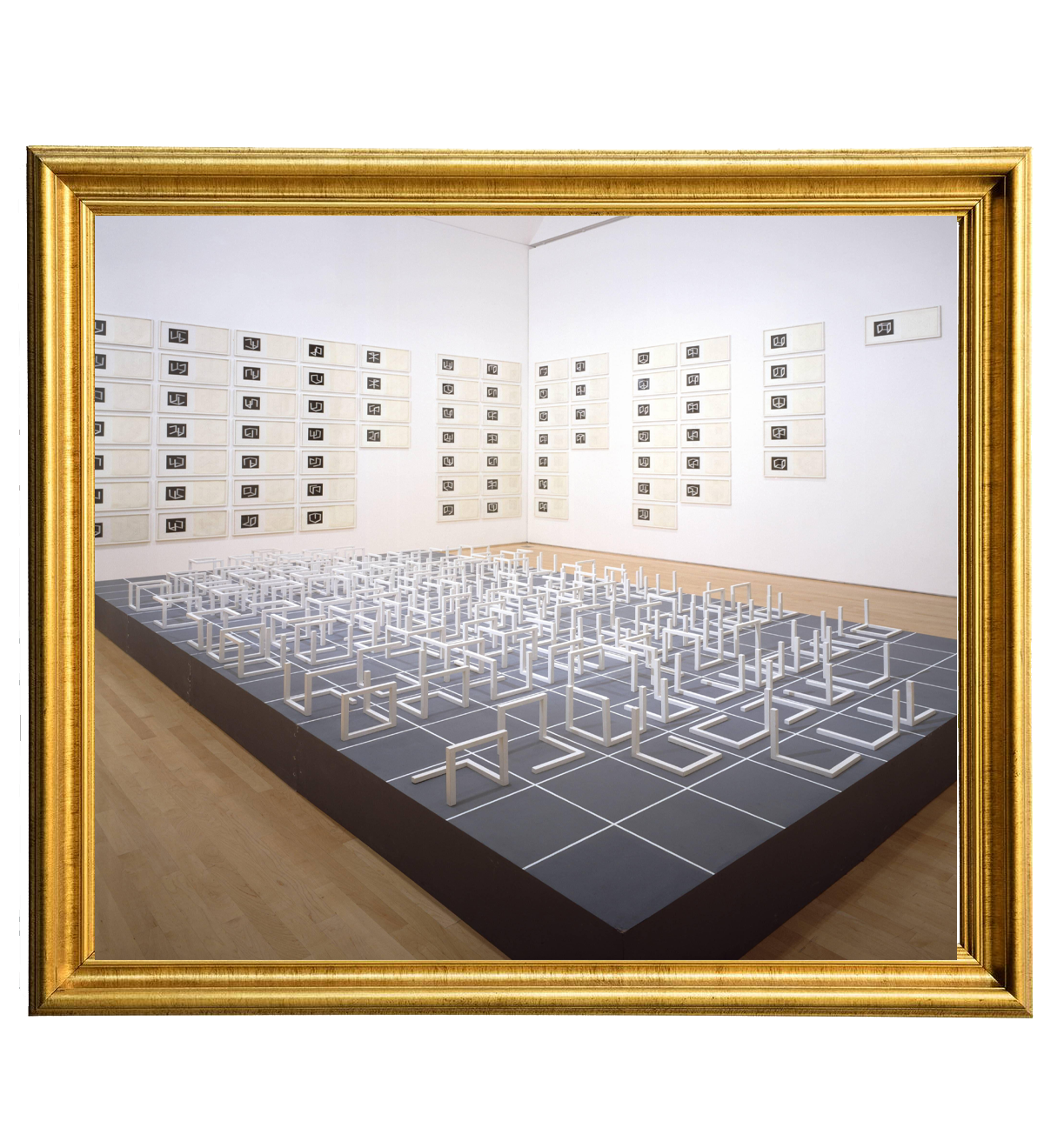
1. Wall Drawing Series
Caption: “Wall Drawing Series” — LeWitt uses simple lines, geometric patterns, and written instructions to create artworks that focus on ideas, systems, and repetition.
Influences
-Historical Influence
The social and political changes of the 1960s encouraged artists to question authority and traditional institutions.
-Social Influence
Artists challenged the commercial art market and believed that ideas should be accessible to everyone.
-Geographical Influence
Conceptual Art developed mainly in the United States and Britain before spreading worldwide.
-Philosophical Influence
The movement explored questions about language, meaning, knowledge, and the purpose of art.It encouraged viewers to think critically rather than simply admire an artwork.
-Artistic Influence
Conceptual Art was influenced by:
• Dada
• Marcel Duchamp’s Readymades
• Minimalism
• Performance Art
Insight
and conclution.
Student Insight
I think Conceptual Art is one of the most interesting art movements because it proves that a powerful idea can be more important than a beautiful image. It encourages viewers to think deeply and reminds us that art can start conversations, challenge beliefs, and inspire new ways of seeing the world.Conceptual Art transformed modern art by placing ideas above appearance. Artists such as Joseph Kosuth and Sol LeWitt challenged traditional artistic conventions and expanded the definition of what art could be. Today, Conceptual Art continues to influence installation art, performance art, graphic design, and contemporary creative practices.